






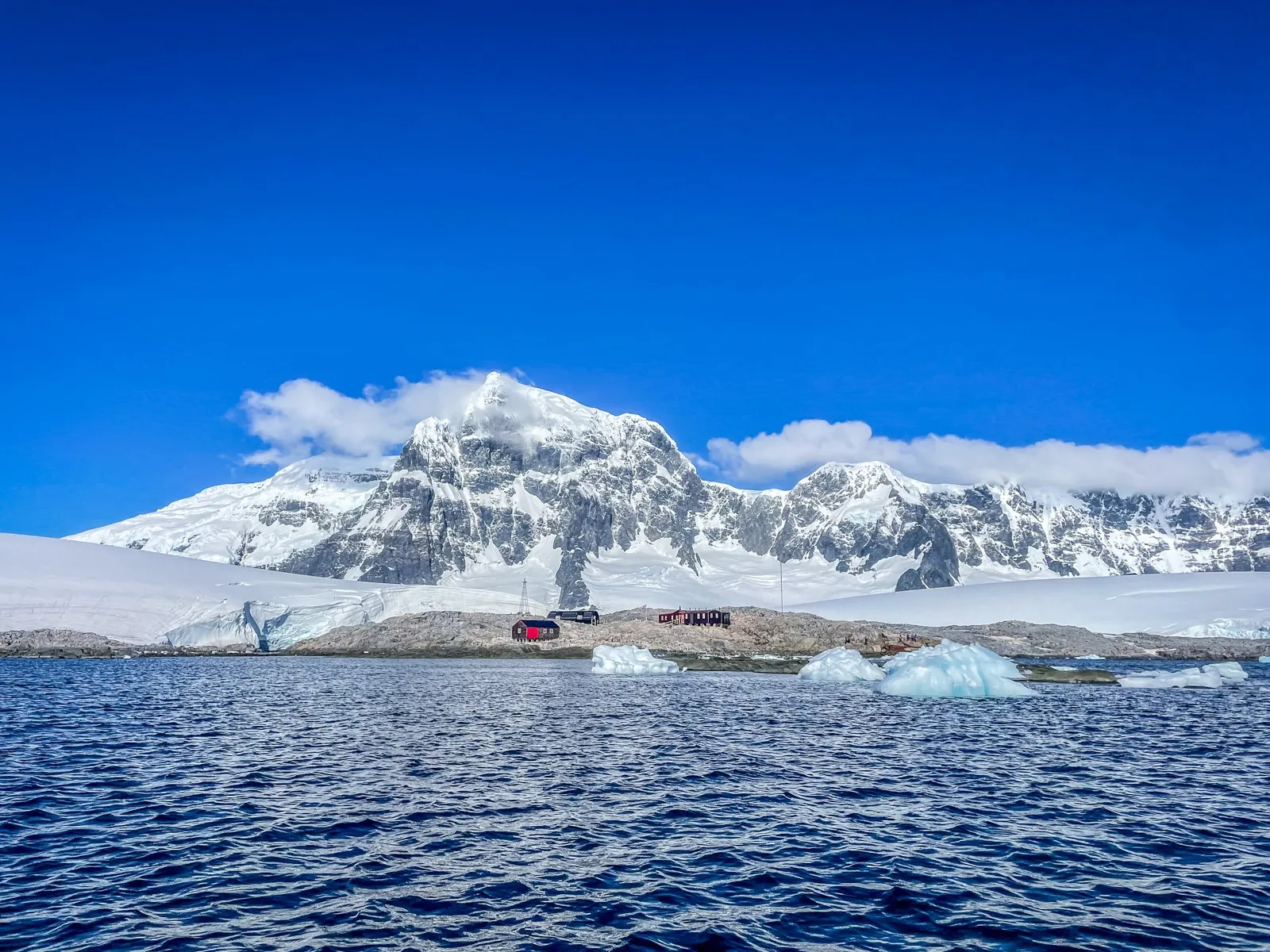
Port Lockroy
PORT LOCKROY
A BRIEF HISTORY
Port Lockroy has been known as a safe anchorage following its use by the whaling fleets of the early 20th century and for this reason was selected for the first continuously occupied British base to establish a year-round British presence in Antarctica. Base A, Port Lockroy was established on the 11th February 1944 as part of a wartime mission code-named Operation Tabarin. Designated Historic Site and Monument no. 61, Port Lockroy has been fully managed by UKAHT since 2006.
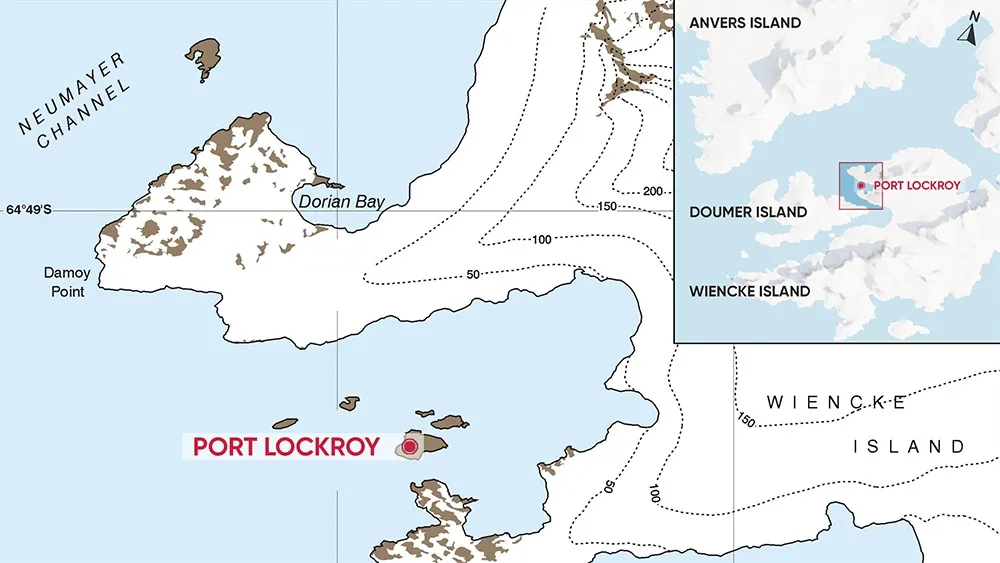
Safe Anchorage
Built on Goudier Island in the west of Port Lockroy, Base A is situated in a sheltered harbour off the coast of Wiencke Island and at the meeting of three seaways which offer some of the most dramatic mountain and glacier scenery on the west side of the Antarctic Peninsula. For more than a century Port Lockroy has been a home for explorers, whalers, scientists, and sailors who have made vital contributions to Antarctic history and the harbour has become the most popular visitor destination in Antarctica today.
Operation Tabarin
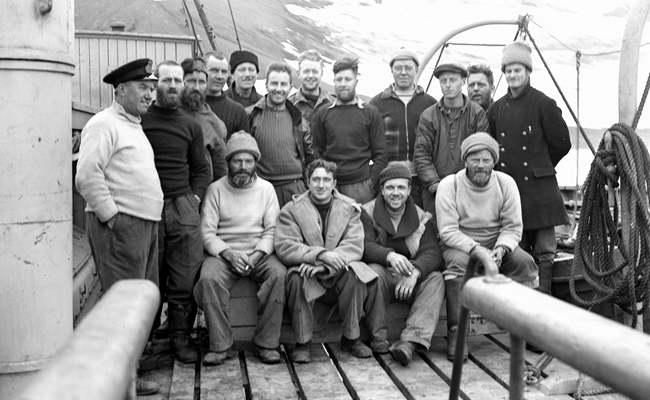
Operation Tabarin was a secret mission in 1944 by the British
Government to establish a permanent presence in Antarctica and assert
territorial claims. This involved building the first overwintering
bases in Antarctica and formed the foundations of Britain’s continued
involvement in Antarctica. Port Lockroy was the first of these bases
to be established and was to become the birthplace of the British
Antarctic Survey (BAS).
Image: Operation Tabarin Members
©BAS Archives

Scientific Research
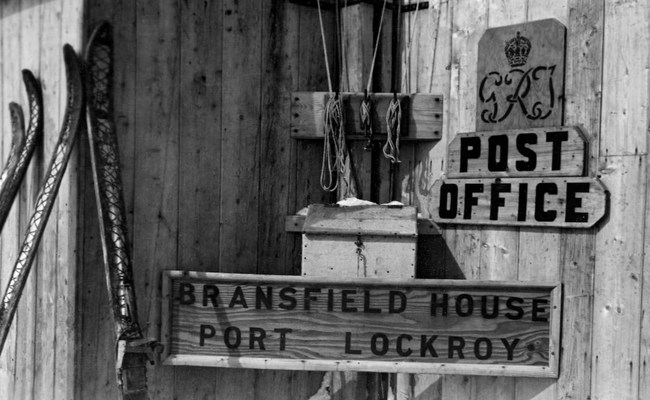
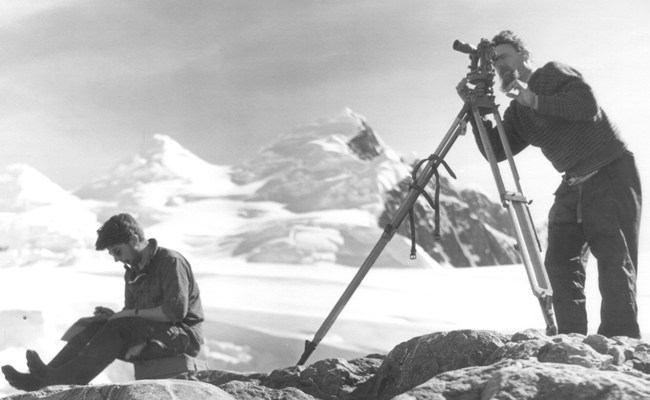
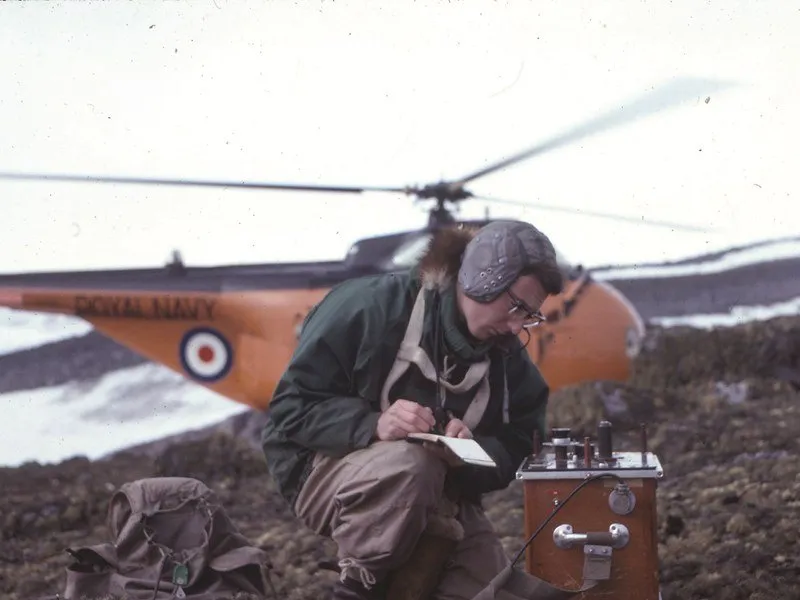
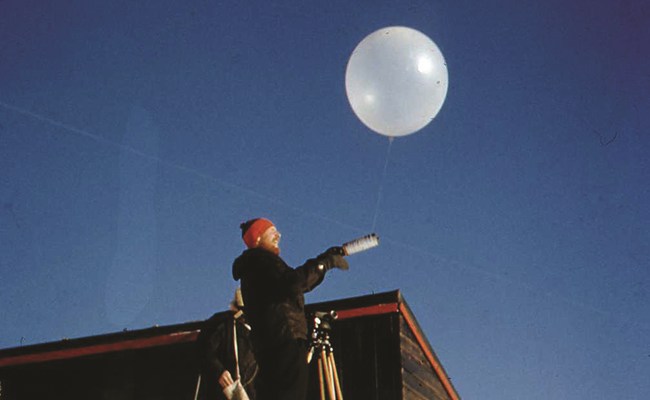
In 1945 the operation of Port Lockroy was transferred to the newly
formed Falkland Island Dependency Survey, the predecessor to BAS, who
operated the site as an atmospheric science research base as well as a
wireless communications hub for the more southern sites. Port Lockroy
continued to operate until January 1962, when the research was moved
to larger and more modern bases.
Images: ©BAS Archives
Transition to a Historic Site
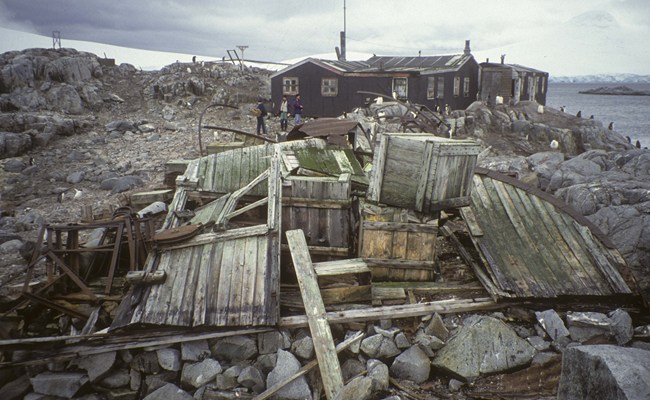
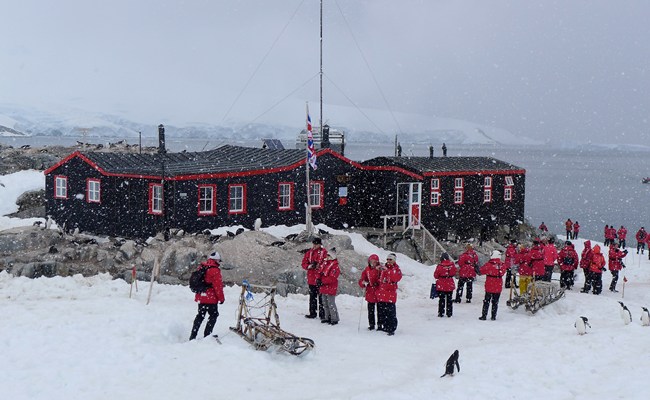
In recognition of it being the only surviving base from the first year of Operation Tabarin, and its important contribution to atmospheric research, it became Historic Site and Monument no. 61 in 1995. The following year, a team from BAS, with assistance from UKAHT, conducted significant restoration works to the buildings and made them weather-tight. Since November 1996, the base has been managed as a historic site and museum. UKAHT took over full responsibility in 2006, welcoming up to 18,000 visitors each season.
Image: Port Lockroy pre-restoration in 1994 (Photo by Ian Collinge, ©NERC-BAS); visitors at the site.
The site today
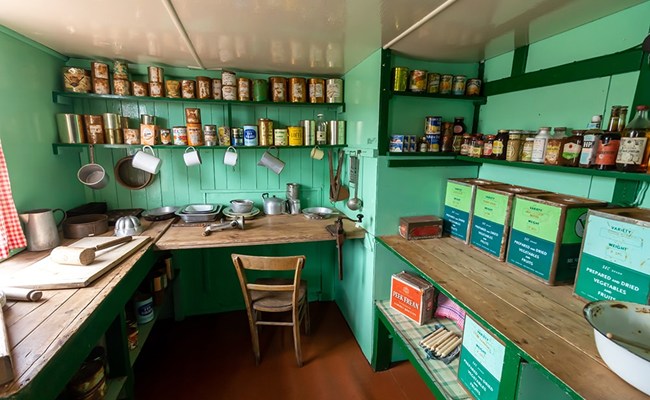
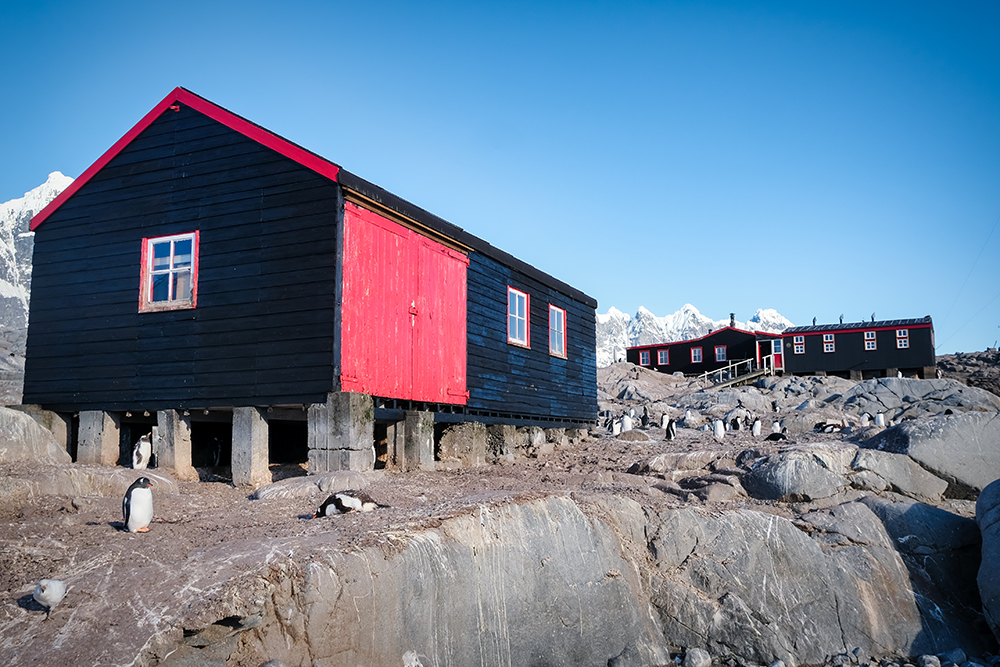
Port Lockroy consists of three buildings, the largest of which is Bransfield House, which houses a museum, post office and shop. The core of the building was made from pre-fabricated timber supplied from naval stores at the start of Operation Tabarin. The building was extended and modified a number of times during its operational life. The second historic building is the boatshed and store built in 1957, and the third is a modern reproduction of a Nissen hut which stood on the same site from 1944 but had collapsed by 1994. The Nissen is now used as staff accommodation.
Welcoming visitors
Each year, we have a team open Port Lockroy for the austral summer to
welcome visitors from across the world to our museum, which serves as
a time capsule of early polar science, showcasing artefacts from
several historic bases. Proceeds from the gift shop and post office
pay for the operation of Port Lockroy and help to safeguard other
British historic sites on the continent. The team also support ongoing
conservation management of the site and conducts wildlife monitoring
and data collection on behalf of BAS. Data from this research is
available to view on the Port Lockroy data portal.
Images:
María Pía Harboure


80 years of an ever-evolving story
On 11 February 2024, Port Lockroy celebrated its 80th birthday. For three decades, we have had the privilege to conserve this unique site, share its stories and inspire others to see and experience Port Lockroy through innovative technology, art and culture. But we couldn’t do it without our supporters. To all our collaborators, partners and friends within the polar and scientific communities in the UK and Antarctica, your continued support for our work is immensely appreciated. We look forward to many more years working closely together to ensure the preservation of Base A, Port Lockroy.


Visit Goudier Island Online
Follow the link to explore Port Lockroy, view a virtual Goudier Island created as a 3D model by laser scanning technology.
Then take a 360° virtual walkabout tour of Bransfield House to explore our flagship site and museum.
Conservation at Port Lockroy
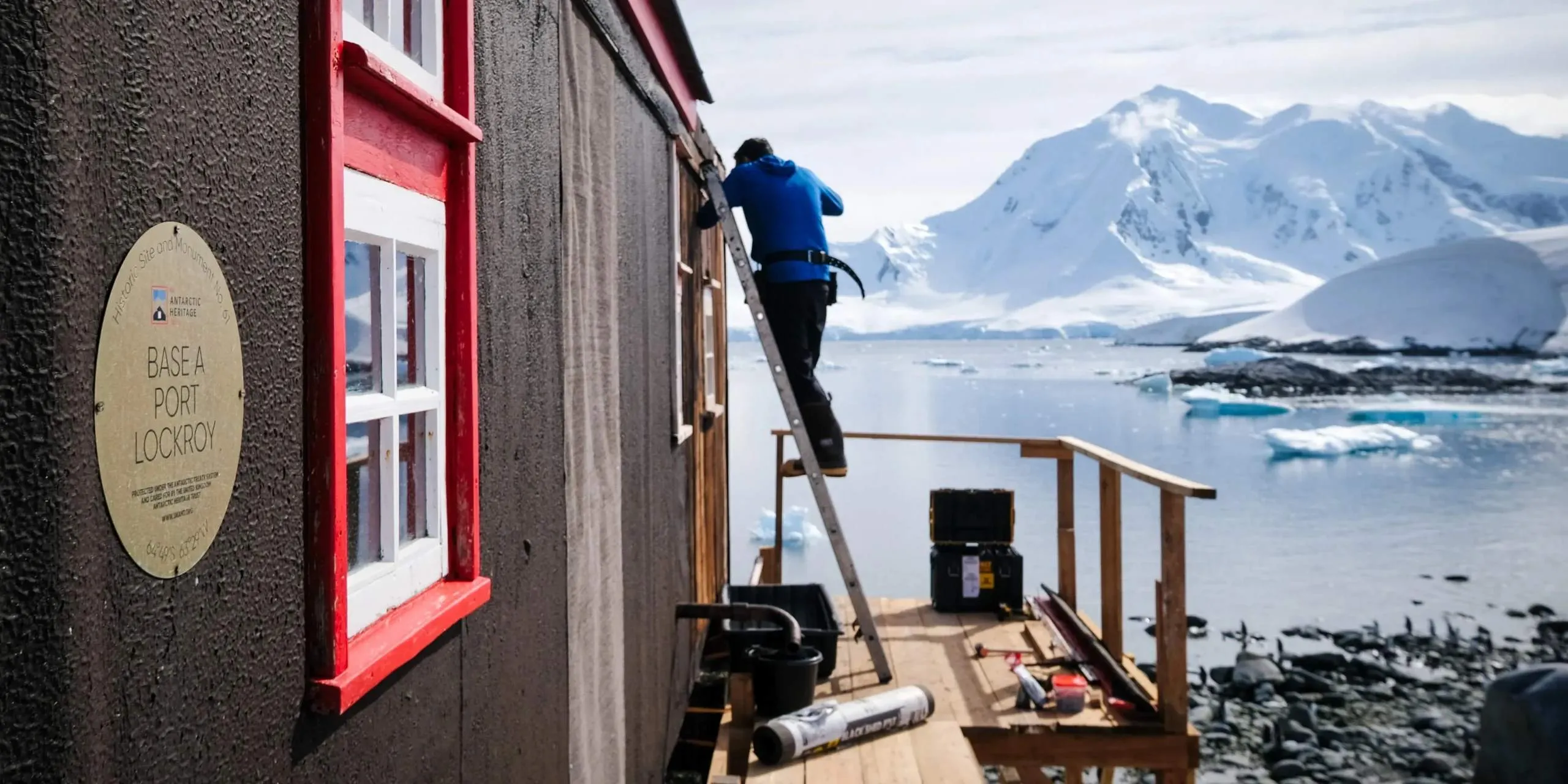
Our conservation team conducts regular maintenance work at Port Lockroy and, in recent years, has conducted building condition surveys to support a site-specific conservation management plan. We only use traditional materials and techniques when carrying out any work to preserve the buildings’ authenticity. You can help to support our conservation work by making a donation today.
Latest Port Lockroy Blog posts

Post-modern: the world’s most unusual post offices
Discover some of the world’s most unusual post offices, from a submerged outpost in the Pacific to mail…
From the southernmost to the smallest: a postcard’s journey
A postcard travels from Antarctica’s Penguin Post Office to Ochopee, Florida – the tiny Everglades hut known as…
Postmarked in Antarctica, delivered to Santa Claus
From the world’s southernmost post office to one of the most festive addresses on Earth, a very special…
A huge thank you to our equipment and clothing partners
After three months living and working at Port Lockroy, wildlife monitor Pete Watson reflects on the partners whose…