







Conservation engineer Maggie Cooke reports on assessing four Antarctic heritage bases, revealing structural challenges and priorities for future care.
The 2025-26 season has been a busy one for structural engineering at the charity. For the first time, UKAHT sent a conservation accredited engineer – me – to assess four of the six historic bases, report on their condition and make recommendations for their future care. The sites visited were Port Lockroy, Damoy, Horseshoe and Stonington.
Port Lockroy
Port Lockroy was first on the list and provided a great start. I was able to use drawings from the firm I worked for when I first graduated. It was a pleasure to work with them again and to act as their eyes on the ground for Bransfield House.
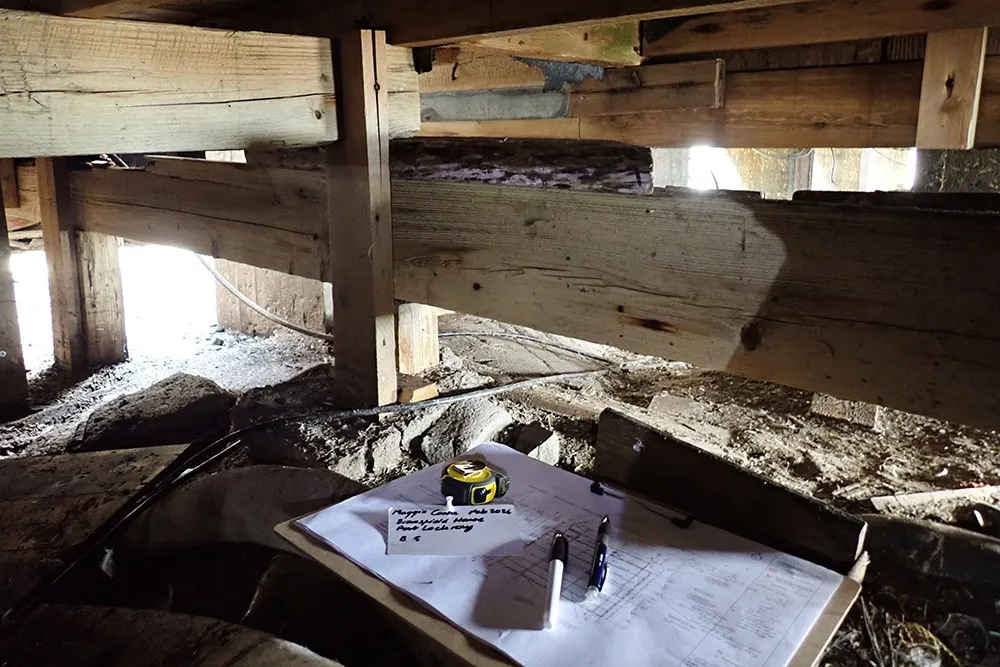
Bransfield House is an incredibly complex building. The first phase in 1944 and the final phase in 1959 were prefabricated and shipped from the UK in sections. Between these are seven distinct construction phases, assembled using materials of uncertain origin, including packing cases and timber from nearby disused bases. These spaces were built as laboratories and living quarters by scientists who prioritised speed and function over longevity.
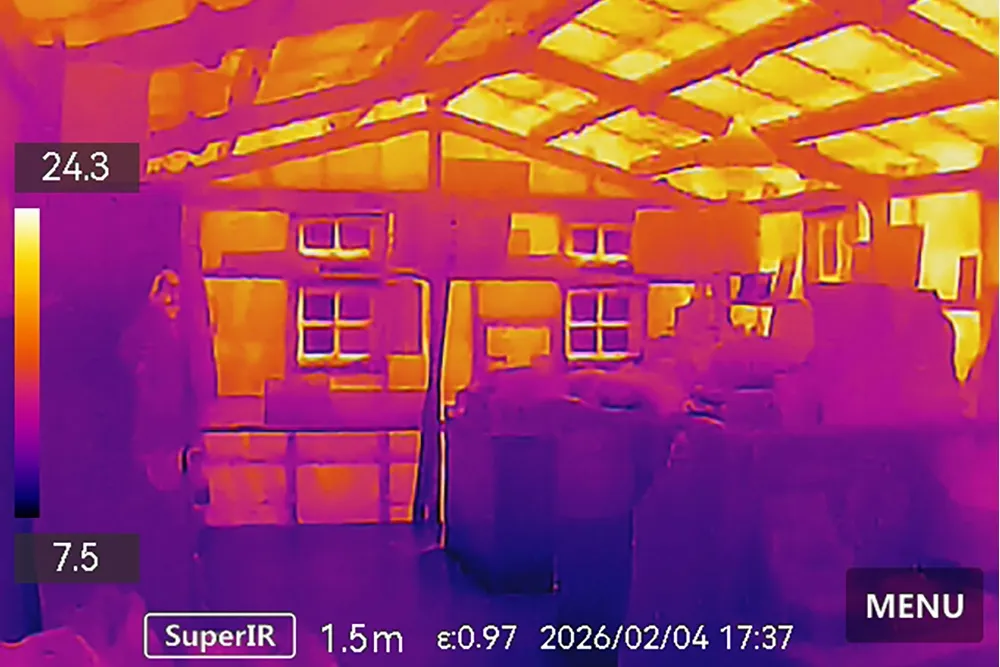
This presents clear challenges today. There are undersized timbers and poor weathering details that are now showing their age. The next step will be a detailed discussion about what comes next.
Damoy Hut
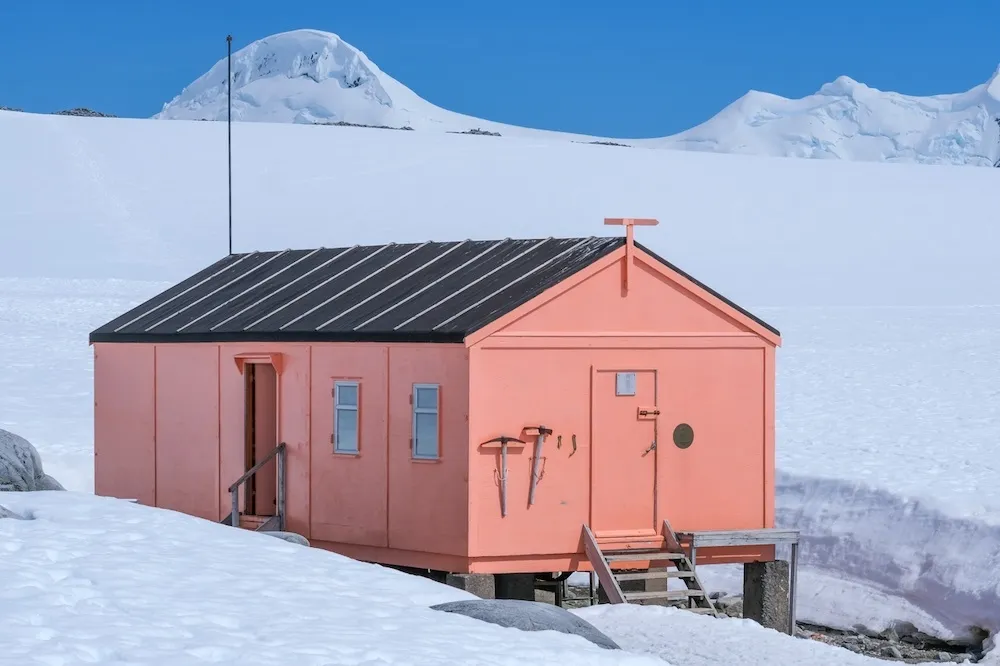
Damoy could not be more different and is refreshingly simple. It is a prefabricated structure built in a single phase and has never been altered. It remains in excellent condition and appears well set for the future with minimal intervention required.
Base E, Stonington Island
Stonington offered a very different experience. I moved from the relative comfort of Port Lockroy, with beds, duvets, tables and chairs, to a field camp where food boxes served as seats and cooking was done on a two-ring gas stove.
Simply transporting all the equipment up the beach, including water, food, tents, camp beds, clothing and technical gear, took several hours even with help from generous expedition teams from visiting cruise ships.
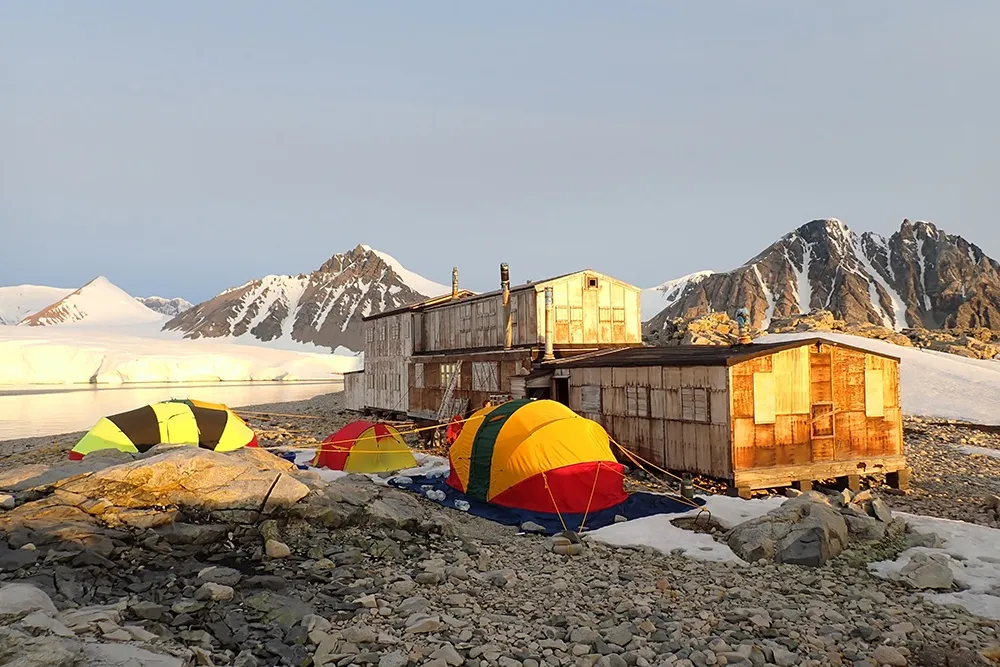
Am I allowed a favourite? If so, Stonington has my heart. It is wild, remote and full of character, and it feels like a place in need of care and attention.
Structurally, there are issues. Each of the four construction phases presents its own challenges. One building may even be held in place partly by the weight of the tins stored inside, as the concrete that should be performing that role is alarmingly crumbly. We plan to test the concrete to understand what has happened and carry out calculations to determine whether the tins are indeed contributing structurally.
Above ground, however, the buildings are in remarkable condition. The climate this far south is colder and drier than at Port Lockroy, and there are very few signs of decay. Even unprotected marine plywood is weathering surprisingly well.
Base Y, Horseshoe Island
Horseshoe felt calm and welcoming by comparison. This was another field camp, this time shared with fur seals and skuas rather than Adélie penguins and Weddell seals.
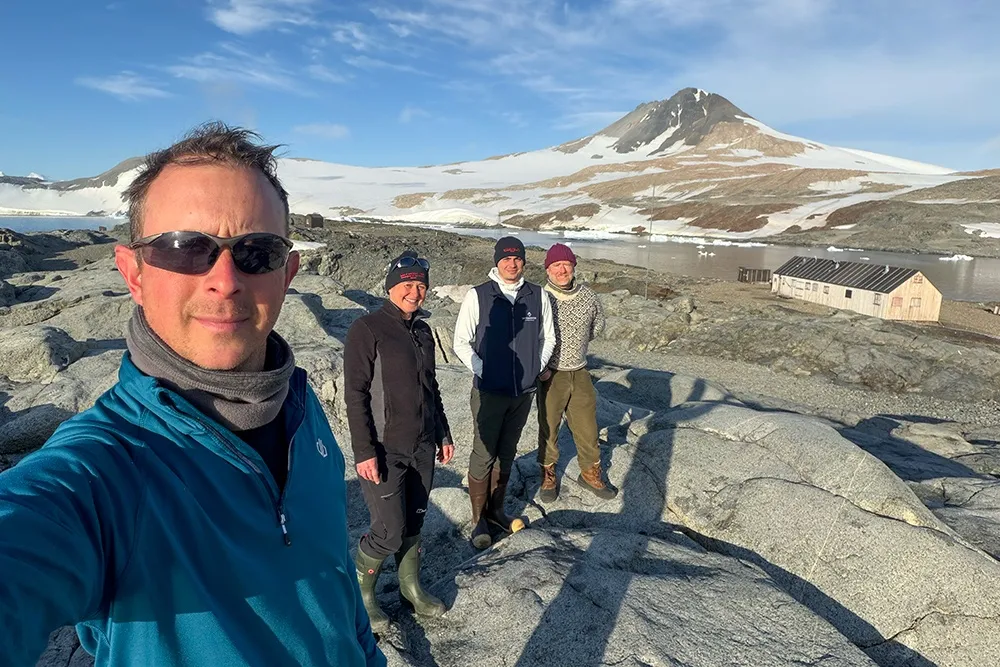
The building itself is performing reasonably well structurally. Some of the issues date back to its original construction, with early reports noting that the builders did not complete all the bolting work. There is inevitably work to be done, particularly on the pup pens and the masts, but overall, the structure remains in fair condition.
Looking ahead
It is an honour to work in such an extraordinary place. This has been a productive season, with a significant amount of data collected. The next stage is to sort, analyse and prioritise this information to inform future conservation work.
These are exciting times for the Trust and for the historic buildings in its care.

If you love a place, protect it
UKAHT is committed to making Antarctica, its heritage and its stories accessible to everyone.
Eighty years in Antarctica have left their mark on this beloved site. Now, Port Lockroy urgently needs restoration to protect its future. Please donate today.
Adopt a penguin
follow a unique colony at the end of the world
Your adoption directly supports on-site colony monitoring and conservation at Port Lockroy. Funds go directly to paying for a wildlife monitor to travel to Antarctica and study the penguin colony at Port Lockroy for the austral summer.