






Endurance Shipwreck
Endurance Shipwreck
Welcome to our Conservation Management Plan for Endurance, a shipwreck in the Weddell Sea.
The Endurance shipwreck is currently protected as a Historic Site and Monument under the Antarctic Treaty. The Conservation Management Plan sets out further ways to manage, conserve and protect the shipwreck now and in the future. We worked closely with Historic England to draft the Conservation Management Plan. They closely consulted a set of key stakeholders over the contents of the Plan as well as experts and advisers. More information is available about how expert feedback has informed the final Plan here.
Endurance
Convservation
CMP
Engagement
FAQ’s
ENDURANCE
FINDING ENDURANCE
A POLAR SCIENTIST AHEAD OF HIS TIME
Endurance, crushed by the ice and swallowed by the Weddell Sea in 1915 was thought to be lost forever. But in 2022 – 107 years later – its resting place on the floor of the Weddell Sea, at some 3,000m depth was discovered by the Endurance22 Expedition in rare favourable conditions. Locating the wreck was considered almost impossible. However, the expert team defied the odds, by combining cutting-edge subsea technology with historical archival research from the original expedition and located the ship just a few miles from where Frank Worsley, the Captain of Endurance, had recorded it in 1915.
A NEW CHAPTER
Taking its place alongside Titanic as one of the most famous shipwrecks of all time, Endurance is a historic and important artefact and site of pre-eminent international significance. With its discovery, a new chapter is unfolding for the ship. Despite its extreme and remote location and the hostile conditions of the Weddell Sea, interest in the ship will inevitably grow now that the location is known. As a heritage of international significance, it is important to define the future of the site so it can be protected and safeguarded for future generations.


CONSERVING ENDURANCE
Our Conservation Management Plan (CMP) describes how the UK will encourage the international community to protect the wreck, promote responsible access for further study and motivate more people globally to discover and be inspired by the story of the ship. Endurance is one of the world’s most remote and inaccessible historic sites. It is also arguably one of the most stable and its management is less about practical preservation interventions than it is about managing understanding of the site.
THE FUTURE OF ENDURANCE
The UK Antarctic Heritage Trust has led the development of this plan, working with Historic England and a group of key stakeholders. The plan is intended to present a shared vision for the future of Endurance and we hope the CMP guidance will be followed by all Antarctic Treaty Parties. The CMP aims to inspire an international effort to protect and promote an understanding of Endurance for the benefit of current and future generations.
CONSERVATION
THE STORY SO FAR
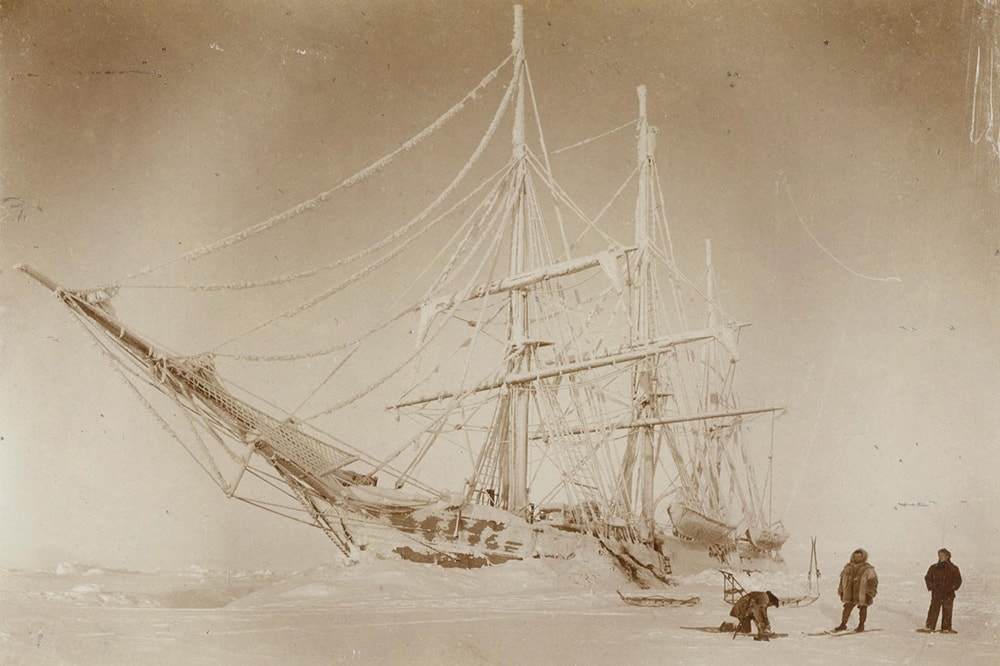
In 1915, when attempting to cross Antarctica, Sir Ernest Shackleton’s ship, Endurance, became trapped in dense pack ice. The 28 men on board spent 10 months in the ice before escaping in lifeboats and on foot, and their ship was lost to the Weddell Sea.
Attempts to find the ship were fruitless for a century but the British-led Endurance22 expedition, organised by the Falklands Maritime Heritage Trust finally found the wreck in 2022. It is largely intact, with cooking utensils and personal effects preserved by the icy water. The ship’s name and the pole star emblem are still clearly visible, making it one of the best-preserved wrecks of the Heroic Age of Antarctic exploration.
The UK Antarctic Heritage Trust (UKAHT) was created in 1993 to conserve British Antarctic heritage for future generations. For the last year, UKAHT has been working in partnership with Historic England to create a conservation management plan – a framework for protecting Endurance, detailing how to study it responsibly, and inspiring people across the globe with its story.
THE APPROACH
The conservation management plan describes the conservation management principles which will enable Endurance to be preserved into the future. There is little that is needed or can be practically done to conserve the wreck, but guidance on how the whole site can be protected, by controlling access and guiding further study, seeks to prevent future harm.
Endurance lies at the bottom of the Weddell Sea, 3,000m below sea level, in one of the most remote parts of the globe. This makes it one of the world’s most inaccessible historic sites.
Fortunately, the sub-zero temperatures and the absence of certain kinds of marine biological organisms due to the extreme cold mean that the site has been preserved in good condition and remains stable, and is, therefore, best protected in situ.
The plan lays out guidance for how to best protect the wreck. Access to the wreck must be controlled to protect the integrity of the site. Therefore, all future research will be geared around enhancing the significance of Endurance.
The framework recommends non-destructive research methods, and will leave the artefacts with the wreck. We will assess any future threats to the stability of the wreck – temperature change, for example – and take steps to mitigate any risks.
UKAHT, Historic England, and our partner stakeholders are committed to absolute transparency in the conservation of Endurance, working in collaboration with international experts and other signatories to the Antarctic Treaty.
PRESERVING ENDURANCE UNDER THE ANTARCTIC TREATY
There are 56 active member countries signed up to the Antarctic Treaty, and all are governed by strict rules regarding scientific research, environmental protection, and the management of historic sites – of which there are 95 across Antarctica.
The wreck of Endurance is designated as an historic site and monument (HSM) No.93 and the UK has primary management of the site.
Endurance is also a site of ecological significance, and our conservation plan takes that into account. The wreck of Endurance is in effect an artificial reef, providing a niche for a wide variety of sessile, filter-feeding animals. This provides a unique opportunity for Antarctic marine biologists to study the colonisation of the vessel and its impact on the environment.
UNDERSTANDING THE RISKS
We believe that conserving Endurance in situ is the best course of action but no strategy is entirely without risk. There are several potential threats that could impact Endurance. Here are some of the principal concerns:
A lack of published data
We are awaiting the
full wreck survey and archaeological report, which will reveal any
parts of the ship that could be especially vulnerable
Subsea tech
While deep water ROVs, AUVs, and
submersibles have been tested in many environments, their use
beneath extensive ice cover has been limited. Therefore there is a
risk of collision or accidental damage
Theft
There is a danger that people or
organisations will attempt to recover artefacts from the wreck
without authorisation.
Damage through tourism
As the excitement
around Endurance builds, it is possible that tourism could
present a threat. Any attempt to visit the site – even entering the
vicinity – could cause damage to the wreck.
Fishing
There is potential for abandoned,
lost, or discarded fishing gear to become entangled within the
wreck.
Climate change
The consequences of climate
change on the long-term survival of the wreck site are still
unknown. Increased water temperature and ocean acidification could
result in accelerated biological and chemical decay of the
shipwreck.
MITIGATION STRATEGIES
While some findings from the Endurance22 expedition have been made public, the full wreck survey will come later. Once this is available, the CMP will be revised to reflect the fuller understanding of the wreck.
Any plan to visit the site must be subject to both an Environmental Impact Assessment (EIA) and a Heritage Impact Assessment (HIA). Experts from heritage management, maritime archaeology, polar exploration, deep sea engineering, marine biology and more should be consulted before permits are issued. The organisations and pilots must have a track record in deep-sea expeditions to be considered for missions of this kind.
While we recognise that any attempt to study the site does come with some risk, there are also benefits. Not only does this site allow technologists to expand the range and specialisms of these subsea technologies, but they will also be vital in our efforts to bring this incredible historic site to life.
The remote location of the wreck, the coverage of ice, and the extreme depth at which the wreck lies all make the risk of unauthorised access low. However, to afford enhanced protection we recommend the HSM designated area be extended to a 1500m radius from the wreck site to ensure that the full debris field is protected.
In addition, the UK and partner nations are keen to pursue further protected status within the Antarctic Treaty System, one such instrument would be the designation of the wreck site as an Antarctic Specially Protected Area (ASPA), which will be developed.
To further mitigate the risk of unauthorised access, including by tourists or fishing vessels, we may choose to use digital monitoring tools. By notifying the UK Hydrographic Office (UKHO) of the precise coordinates of the site, it will be easier to declare the area a no-go zone for unauthorised vessels.
We rely on the vigilance of vessels operating in the wider area, as they will report any unauthorised ships near the coordinates of Endurance. The International Association of Antarctic Tour Operators has already pledged their support for the plan and asked their members not to plan any visits to the area. They have also confirmed no tourist vessel has the submersible capability to reach such depths at present. Similar discussions with representatives from the fishing industry through the Antarctic Treaty System will, we hope, help to establish guidelines for activity in the area.
We cannot stop temperatures from rising, or change the weather, but we can monitor the ongoing impact of climate change, and adapt our conservation plans accordingly should the need arise.
OPPORTUNITIES
It is clear from the data/imagery captured during its discovery that this wreck has the potential to tell a thrilling story of how these great adventurers lived and worked aboard the ship.
We will be able to understand more about the construction of the ship and also see the modifications and repairs undertaken by the carpenter and the ship’s crew. We will reach a true understanding of the damage inflicted on the vessel while it was trapped in the ice. In addition, there is potential to obtain information about the physical, chemical, and biological processes which have occurred while the vessel has been on the seabed.
The wreck also hosts a wide variety of marine life. The analysis of this rare and important marine ecosystem is at an early stage and will progress further as the data are released into the public domain.
SHARING THE STORY
Endurance will not be removed from the water and exhibited in a museum, but this does not mean it will be hidden away from the public.
The high-resolution imagery, video and digital data captured during the discovery of the wreck provides a wealth of visual information that can be used for education and immersive experiences. These data can be turned into interactive resources for use in scientific research by museums and for exhibitions which will allow people to discover and experience the wreck.
The history of the Heroic Age of Antarctic exploration is well documented but the discovery of the wreck site has reignited interest in this fascinating period of history. It will help bring the books, TV programmes and museum exhibits to the forefront, and provides new rich content for public engagement.
SIX KEY CONSERVATION MANAGEMENT PRINCIPLES, AT A GLANCE
1. All activity relating to the site should be undertaken with the aim to preserve and/or enhance the significance of the site. There will be a presumption in favour of a non-destructive survey in preference to any recovery of the wreck structure or artefacts.
2. The biodiversity, habitats, and ecology of the wreck of Endurance will be studied, recorded, and conserved.
3. Long-term challenges to the significance of the wreck of Endurance will be identified, and mitigation methods explored with stakeholders and partner organisations.
4. Access to the wreck site will be managed to ensure that activities are not detrimental to the significance of the site.
5. The significance of the site will be enhanced by maximising opportunities for knowledge enhancement and public dissemination.
6. The ongoing management of the wreck will be transparent and collaborative and based on clear policies outlined in this Conservation Management Plan.
CONSERVATION MANAGEMENT PLAN
Please read the Plan here.
The Conservation Management Plan was submitted to the Antarctic Treaty Consultative Meeting, which was held in May 2024. The aim is to manage, conserve and protect the shipwreck by implementing the Plan and ultimately seeking an ASPA (Antarctic Specially Protected Area) designation.
The Plan will be reviewed and updated regularly to ensure Endurance is managed, conserved and protected.
The United Kingdom is responsible for the shipwreck and the Conservation Management Plan provides a framework for the long-term management of the site. The UK strongly encourages all parties to the Antarctic Treaty to follow the Plan and respect any future designation as an ASPA.
Read our website to find out more about Endurance, the team behind the Conservation Management Plan and how we have worked together to develop the Plan.
Please click on the image below to view the CMP online
ENGAGEMENT

CONSULTATION STATEMENT
UKAHT worked closely with a number of experts and organisations to develop the Conservation Management Plan. A list of all those who took part is published in the Plan itself. Bringing together experts and encouraging feedback helped to enrich the Plan and ensure it is fit for purpose.
‘A team of key stakeholders also advised on the creation of the CMP, including the Shackleton Family, Foreign, Commonwealth and Development Office (FCDO), British Antarctic Survey, Falklands Maritime Heritage Trust, Endurance22 expedition members and a number of experts in relevant fields.’
UKAHT would like to say a big thank you to all those who have taken part in the development of the Conservation Management Plan for Endurance.
If you would like to read more about how consultation was undertaken and how it informed the Plan, please see our Consultation Report here.
FOREIGN, COMMONWEALTH & DEVELOPMENT OFFICE
The FCDO is the ministry of foreign affairs and a ministerial department of the Government of the United Kingdom. The Polar Regions Department of the FCDO leads on Antarctic matters with February 2024 seeing the 80th anniversary of the appointment of the FCDO’s first Antarctic expert.


HISTORIC ENGLAND
Historic England protects, champions and saves the places that define who we are and where we’ve come from as a nation. We care passionately about the stories they tell, the ideas they represent and the people who live, work and play among them.
FREQUENTLY ASKED QUESTIONS
What was Endurance?


The Endurance was a three-masted sail and steamship that Sir Ernest Shackleton and a crew of 27 men sailed for the Antarctic on the 1914-17 Imperial Trans-Antarctic Expedition.
The ship was built at Framnæs shipyard, Sandefjord, Norway, in 1912 and was originally named Polaris. After her commissioners could no longer pay the shipyard, the ship was bought by Shackleton in January 1914 for the expedition, which would be her first voyage. The Endurance was 44m (144ft) long with a 7.6m (25ft) beam and registered 350 tons gross.
What was the Imperial Trans-Antarctic Expedition?
The aim of the 1914-17 Imperial Trans-Antarctic Expedition was to achieve the first crossing of Antarctica from the Weddell Sea via the South Pole to the Ross Sea. The Ross Sea Party, which landed at Hut Point on Ross Island, had the task of setting up supply depots for Shackleton’s crossing part. Their objective was achieved but at the cost of three lost lives.
In the Weddell Sea, the Endurance never reached land and became trapped in the dense pack ice and the 28 men on board eventually had no choice but to abandon ship. After months spent in makeshift camps on the ice floes drifting northwards, the party took to the lifeboats to reach the inhospitable and uninhabited Elephant Island. Shackleton and five others then made an extraordinary 1,300km (800mi) open-boat journey in the lifeboat, James Caird, to reach South Georgia. Shackleton and two others then crossed the mountainous island to the whaling station at Stromness. From there, Shackleton was eventually able to mount a rescue of the men waiting on Elephant Island and bring them home without further loss of life.
Who was Ernest Shackleton?
Ernest Henry Shackleton (15 February 1874 – 5 January 1922) was a polar explorer involved in several British expeditions to the Antarctic in the early 1900s, a period known as the Heroic Age of Antarctic Exploration. Shackleton was a member of Captain Scott’s Discovery Expedition (1901-04), during which he, Scott and Edward Wilson set a new southernmost record by sledging to 82°S.
During Shackleton’s Nimrod Expedition (1907-09) he and three companions achieved a new record for the Farthest South latitude at 88°S – only 180km (112mi) from the South Pole. In 1909, Shackleton was knighted by King Edward VII.
Shackleton’s Imperial Trans-Antarctic Expedition (1914-17), was an attempt to make the first overland crossing of the Antarctic continent. Despite its failure, Shackleton returned as a public hero and published his first-hand account of the expedition in South.
Shackleton died on board the Quest during his final expedition. At the request of his wife, Emily Shackleton, his body was buried in South Georgia.
What happened to Endurance?
The Endurance entered the pack ice on 7 December 1914. On 18 January 1915, the ship became trapped and drifted gradually north with the ice for 10 months. The crew remained with the ship until 27 October when it began to break up and they were forced to abandon it. The ship eventually sank in the Weddell Sea off Antarctica on 21 November 1915.
When and where was the Endurance shipwreck found?
The Endurance shipwreck was discovered in the Weddell Sea on 5 March 2022, 100 years to the day after the burial of Sir Ernest Shackleton at Grytviken, South Georgia. The wreck was located at a depth of 3,008m (9,869ft) around 6.4km (4mi/3.5nmi) south of where it was estimated to have sunk.
What was the Endurance22 Expedition?
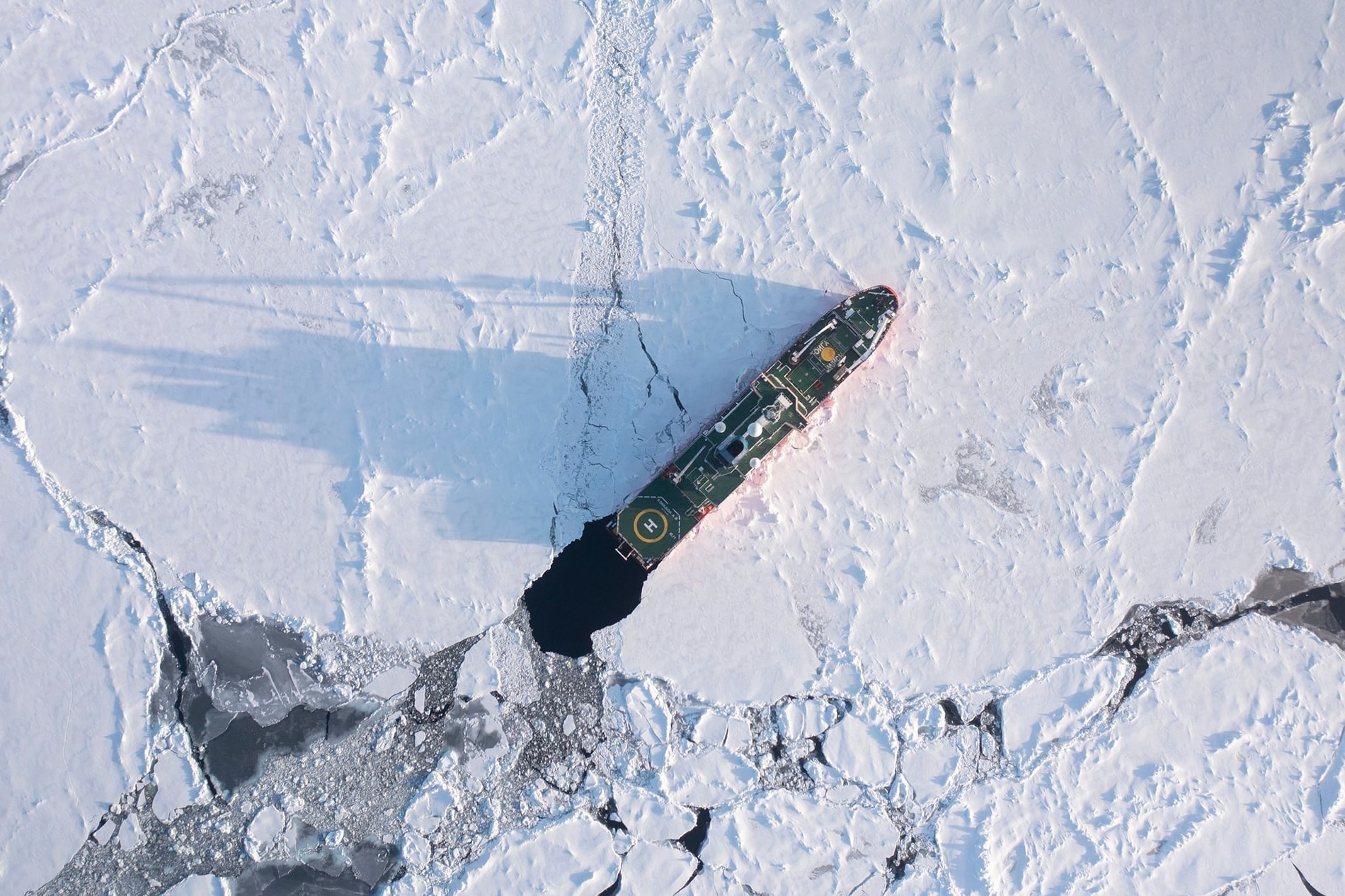
The Endurance22 Expedition was a UK-led expedition organised by the Falklands Maritime Heritage Trust. The expedition comprised subsea and media teams, scientists and marine archaeologists from many countries aboard the South African polar research ship, Agulhas II.
As the expedition unfolded, the on-board media team were able to share live pictures and interviews which were broadcast into schools. The tweet sent by Dan Snow, historian and TV presenter on March 9th, from onboard ship announcing the discovery, was seen by over 10 million people.
Following the discovery of the wreck, the expedition undertook a detailed non-intrusive survey of the shipwreck between 5-7 March 2022, comprising multibeam side scan sonar, high-resolution digital photography, video filming and laser scanning. The results of this will be able to be seen in a documentary feature film describing Shackleton’s original expedition and the success of the Endurance22 Expedition, to be released later this year.
What is the Falklands Maritime Heritage Trust?
The Falklands Maritime Heritage Trust (FMHT) is a UK-registered charity with the aim of advancing the education of the public in the maritime history and heritage of the Falkland Islands and their neighbouring seas. In 2019 the Trust mounted the Weddell Sea Expedition, which made a serious but unsuccessful attempt to find Endurance, but which provide useful lessons for the planning of a future attempt. The Trust organised the Endurance22 expedition which did find Endurance on the 5th March 2022.
What was the name of the ship that found the Endurance shipwreck?
The Endurance shipwreck was found by the polar research and logistics vessel, S.A. Agulhas II, which is owned by the South African government. Built in 2012 in Finland, the Polar Class 5 vessel is one of the world’s largest and most modern research ships and is able to break through ice up to 1m thick at 5kts (8mph). The Agulhas II is 134m (440ft) long and 22m (71ft) wide. You can find out more about the ship here.
Why is the Endurance shipwreck so well preserved?
Despite lying on the seabed for 107 years, the Endurance shipwreck was preserved in remarkably good condition. It was even described as the “Finest wooden shipwreck I’ve ever seen” by the expedition’s Director of Exploration, marine archaeologist Mensun Bound.
Its excellent condition is partly due to the cold temperatures, anaerobic conditions (existing in the absence of free oxygen) and darkness of the environment as these dramatically decrease the decomposition rate of wrecks, in terms of decay and corrosion.
However, perhaps the most significant contributor to the Endurance’s good condition is the absence of wood-eating micro-organisms. Antarctica is forest-free meaning animals that may usually eat through wood in other parts of the oceans are not present there.
Will Endurance be raised?
There are no plans to raise the Endurance. Currently, the best place for the ship is on the sea floor where it has been for 107 years and remains very well preserved.
How is Endurance shipwreck being protected?
The wreck of the Endurance is designated a protected historic site and monument HSM No.93 under the Antarctic Treaty System and is surrounded by a 500m (1,640ft) protection zone.
In 2023, the UK Government commissioned UKAHT to prepare a Conservation Management Plan. It has been prepared by the UK Antarctic Heritage Trust (UKAHT), a charity responsible for the conservation of several heritage sites in Antarctica, in partnership with Historic England, a public body which champions and protects England’s historic places, including shipwrecks in waters around the country. An expert panel of stakeholders is supporting the production of the document, including representatives from FMHT, Endurance22, BAS, and the Shackleton family.
What is a Conservation Management Plan?
In caring for heritage sites and artefacts such as the Endurance shipwreck, there are often many features, historic layers and diverse interests to consider. For example, biodiversity has to be considered alongside the business and economic viability of the site.
Conservation management plans are used as a tool to help pull together an understanding of what matters and why, and how to conserve and manage it. From this informed basis, plans are then used to develop programmes of repair, restoration or to draw up proposals for change.
Conservation management plans not only analyse the history of a landscape but they are also an important record in their own right.
Latest Endurance Blog posts

16 interesting facts about Ernest Shackleton
From his Irish childhood and first experiences in Antarctica to the extraordinary survival story of the Endurance, these…

11 famous ships (and one lifeboat) that made Antarctic history
From the first recorded crossing of the Antarctic Circle to a modern icebreaker representing a new era of…
New photos and videos of Scott’s wrecked ship Terra Nova
The wreck of the ship that carried Captain Robert Scott on his doomed expedition to the Antarctic has…

Endurance film review: a tale of two expeditions
Shackleton’s iconic ship Endurance was found in 2022 and is now in the care of UKAHT following a…