







From Morse code to satellite internet, communication has always shaped life at Port Lockroy. Postmaster George Clarke reflects on how messages continue to connect this remote Antarctic outpost with the wider world.
Communication at the heart of Port Lockroy
Communication is, and always has been, at the heart of Port Lockroy. The very first residents of Base A, during Operation Tabarin, used an ionosonde to research and explore the ionosphere to better understand how radio waves interact with the upper layers of the atmosphere.
Long before satellites became ubiquitous, this little-understood layer acted like a mirror, allowing radio signals to be bounced over vast distances. This research was not only vital to the war effort; it also played an important role in early meteorological exploration.
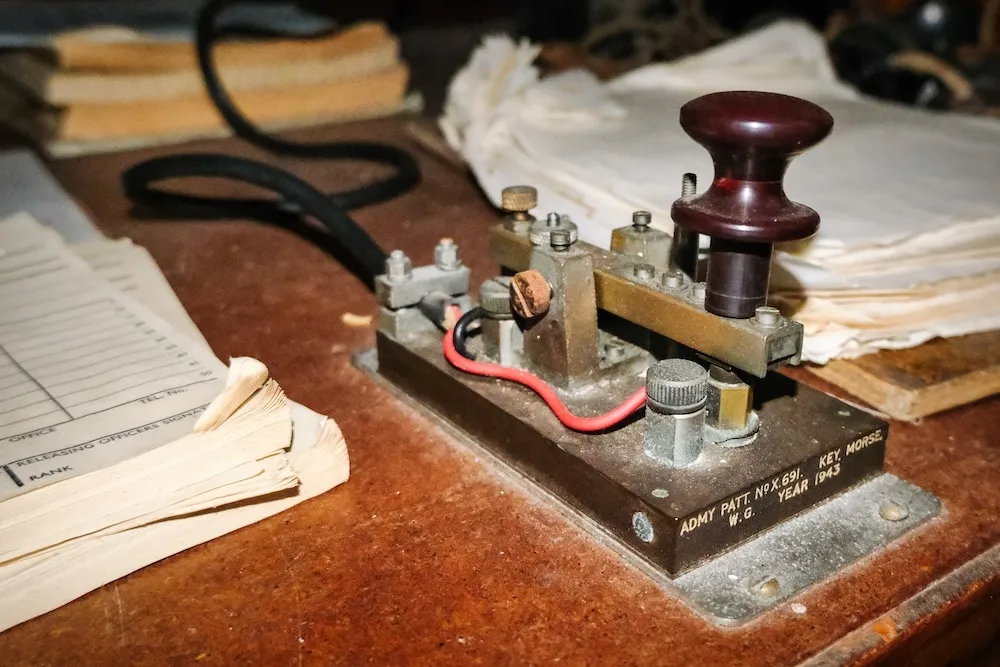
At Port Lockroy, Morse code was used via radio as the main method of long-distance communication, linking the isolated Antarctic base with other stations, the Falkland Islands, and the UK. It supported wartime reporting, weather observations, and essential logistical messages when voice communication was unreliable.
Even in its earliest days, Port Lockroy was a place where staying in touch with the wider world really mattered.
A post office that still brings joy
While we no longer conduct research into the ionosphere, another key part of Port Lockroy’s history – and a primary aim of Operation Tabarin – continues to this day: the post office.
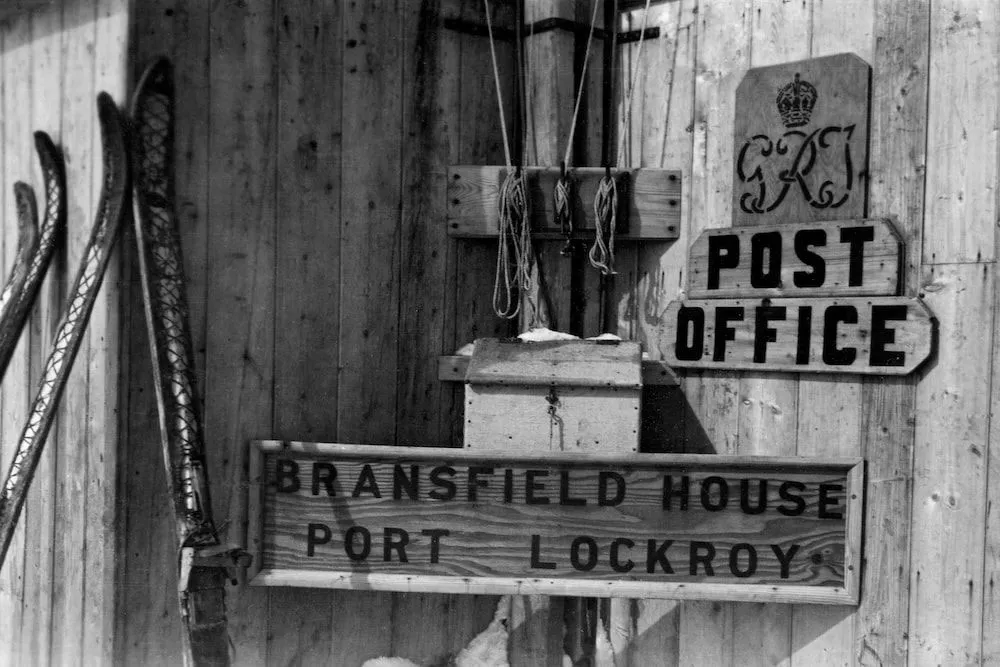
As the Port Lockroy postmaster, I get to see every day the joy people experience when sending postcards from such a remote and remarkable place. I’ve also experienced first-hand the excitement of receiving post on this little island off the Antarctic Peninsula. The timeless simplicity of postcards allows visitors and residents alike to send handwritten messages, notes and news to loved ones across the globe.
This is nothing new. When you walk around Bransfield House, or even from the comfort of your own home, you can listen to the oral histories of Port Lockroy’s early inhabitants. They talk about the importance of sending and receiving letters and telegrams, particularly during wartime. Although the men living on Goudier Island in the 1940s were serving in the military, they were living in relative safety, far from the guns and bombs threatening their families back home.

Old methods in a changing world
Much of the technology surrounding communication between this small island and the wider world has changed remarkably little. Handwritten letters still travel by boat to the Falkland Islands before being flown by RAF planes to the UK and then entering the global postal network. Members of visiting expedition teams still leave notes and trinkets for one another on the noticeboard mounted opposite the post box, just as you walk through the door.

Radio signals, too, remain an essential part of daily island life. We communicate with ships, crews and other bases via VHF radio. During recent spells of bad weather, small sailing yachts announced their arrival over the radio as they sought shelter in the bay around Goudier Island.
A modern connection, used sparingly
One significant change has been the introduction of satellite internet. This allows us to operate the post office and shop more efficiently, as well as helping us stay in touch with friends, colleagues and loved ones back home.
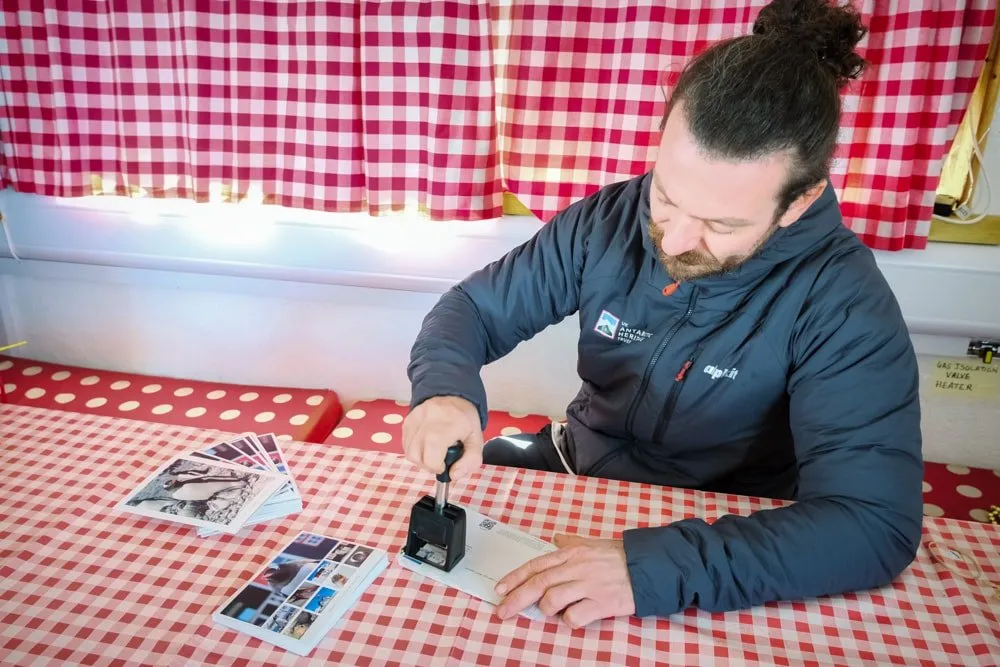
That said, we’re keen to ration our internet usage. One of the many draws of island life is the opportunity to disconnect from the relentless stream of news and opinions that dominate everyday life elsewhere. Checking emails and headlines a couple of times a week feels more than sufficient – and even that seems like a modern luxury when you consider how limited contact with the outside world was during the early days of Operation Tabarin.
Distance still matters
It’s often said that advances in technology are making the world smaller. Faster transport and instant communication mean that much of the world now feels only a short flight – or a direct message – away.
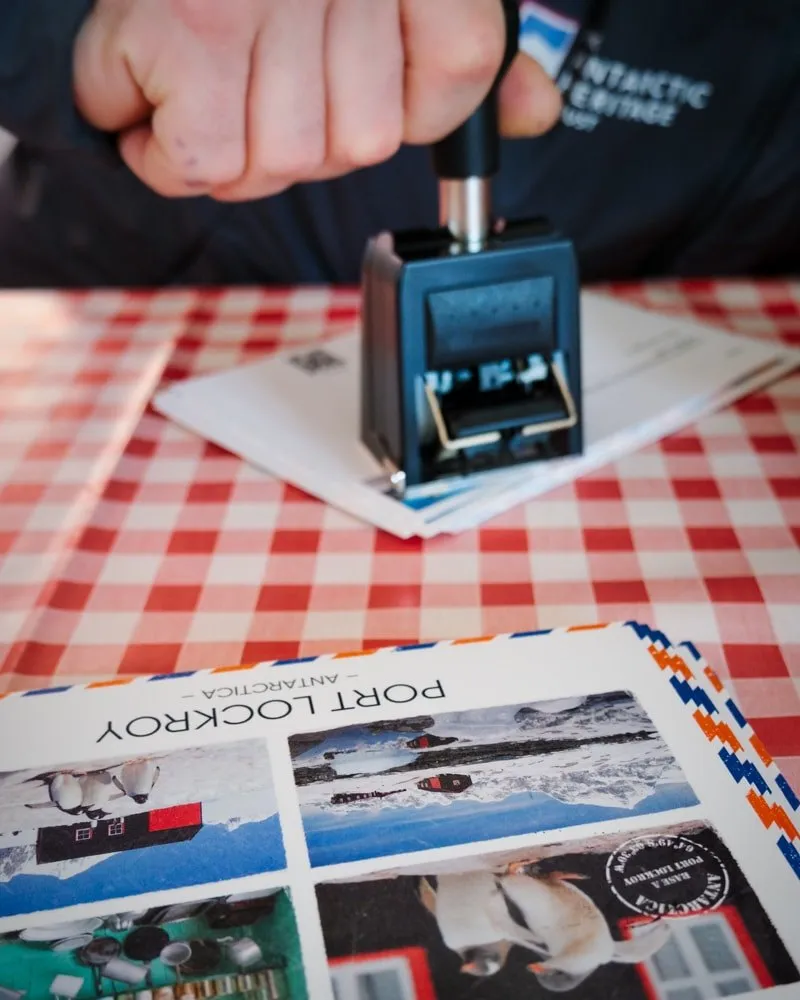
Yet the week-long journey required to reach Port Lockroy, coupled with occasional communication dropouts caused by poor weather, reminds us just how far from home we really are. Walking through the museum at Bransfield House, reading and listening to the experiences of Port Lockroy’s pioneers, we’re reminded of the vital and deeply comforting role communication plays in everyday life, even at the end of the world.
If you love a place, protect it
UKAHT is committed to making Antarctica, its heritage and its stories accessible to everyone.
Eighty years in Antarctica have left their mark on this beloved site. Now, Port Lockroy urgently needs restoration to protect its future. Please donate today.
Adopt a penguin
follow a unique colony at the end of the world
Your adoption directly supports on-site colony monitoring and conservation at Port Lockroy. Funds go directly to paying for a wildlife monitor to travel to Antarctica and study the penguin colony at Port Lockroy for the austral summer.