






Our latest A Frozen Night tour brought Antarctic heritage to audiences across Tasmania and New Zealand, working alongside partners, schools and cultural venues.
Taking a virtual reality experience on a month-long international tour requires more than headsets and charging cables. It takes detailed planning, adaptable delivery and close partnership working, particularly when the route covers two countries, six locations and a wide range of schools, museums, libraries and festival settings.
But that was life on the road as the UK Antarctic Heritage Trust took A Frozen Night to Tasmania and New Zealand from 14 August to 15 September 2026. Across 15 recorded delivery days, we welcomed 562 people, including 161 under-18s, at venues in Hobart, Christchurch, Auckland, Wellington, Arrowtown and Dunedin.
Partnerships that made the tour possible
Our adventure began with an invitation from the Mawson’s Huts Foundation to take part in the Australian Antarctic Festival in Hobart. With our flights and accommodation generously sponsored by Antarctic Tasmania, within the Department of State Growth, it felt like an amazing opportunity—not only to bring A Frozen Night to the Festival, but to build a wider VR tour around the visit. The annual Festival celebrates Hobart’s role as one of the world’s leading Antarctic gateways, making it a particularly fitting place to begin.
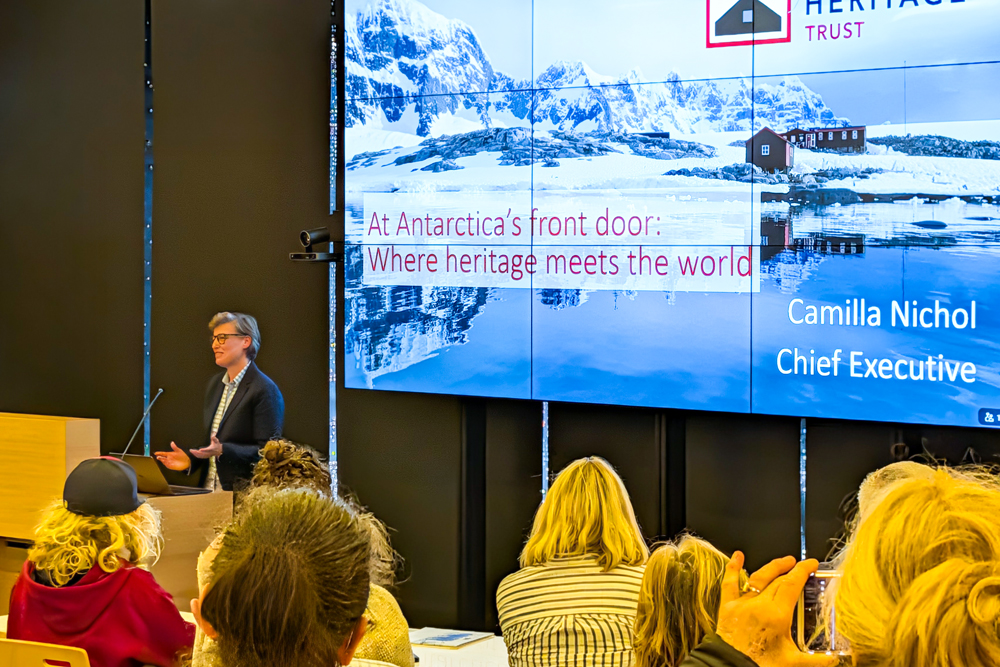
Then it was on to Aotearoa/New Zealand with our friends at Antarctic Heritage Trust, who were alongside us in Hobart too. One of our first lessons was how to pronounce Aotearoa properly, part of the generous cultural introduction our Kiwi counterparts gave us throughout the tour. They had joined us for our UK tour in spring 2025, when our trusty van, lovingly named ‘Hot Chip’, carried two VR experiences, a great deal of equipment and a blossoming international partnership on tour. This time, they were on home turf and ready to return the hospitality.
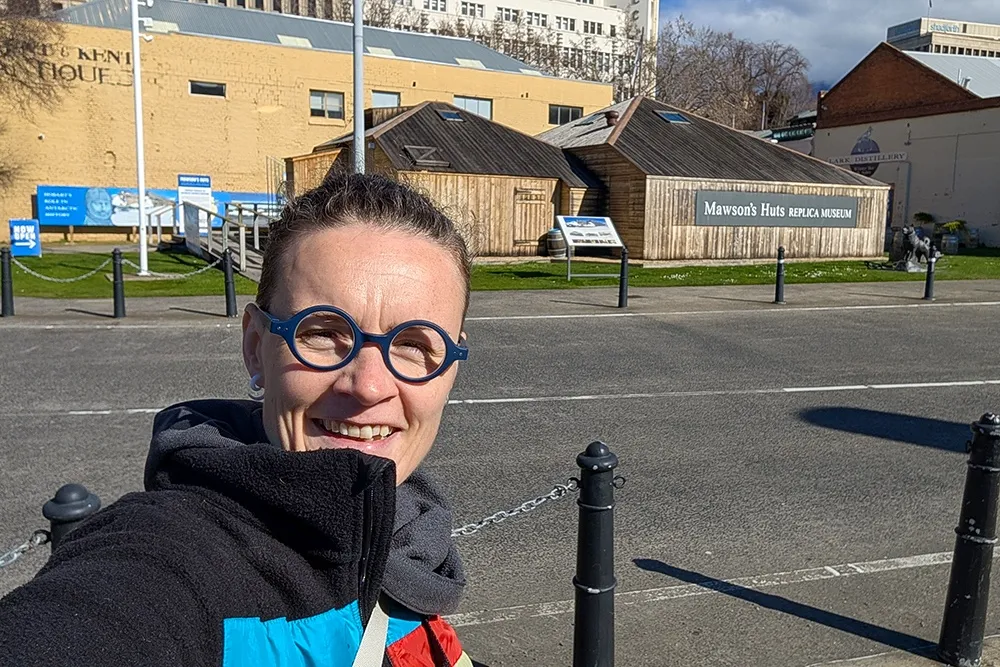
The partnership ran through the whole tour, from local knowledge and venue relationships to events and the final handover session in Christchurch. After weeks of shared setup, problem-solving and headset cleaning, we knew one another rather better than we had at the start. International partnership working, it turns out, is built as much through quick decisions and shared laughter as it is through formal meetings.
Reaching audiences
At every venue, audiences responded to the experience’s atmosphere, personal storytelling, scenery and, most reliably of all, the dog sledging. Of the adults who rated the experience, 93.5% called it “Excellent”, while 78.3% of younger respondents chose “Awesome”. Adults reported a deeper appreciation of Antarctica’s historical, cultural and environmental importance, while younger participants described greater curiosity about its history and nature. For many, it was their first UKAHT event, showing how VR can bring remote heritage compellingly close.
We connected with Antarctic veterans and newcomers alike at the Antarctic Festival in Hobart. We were delighted when word spread among members of the ANARE (Australian National Antarctic Research Expeditions) Club. Many came to see us and found the VR emotionally compelling, as it brought back memories of their own experiences on the Antarctic continent.
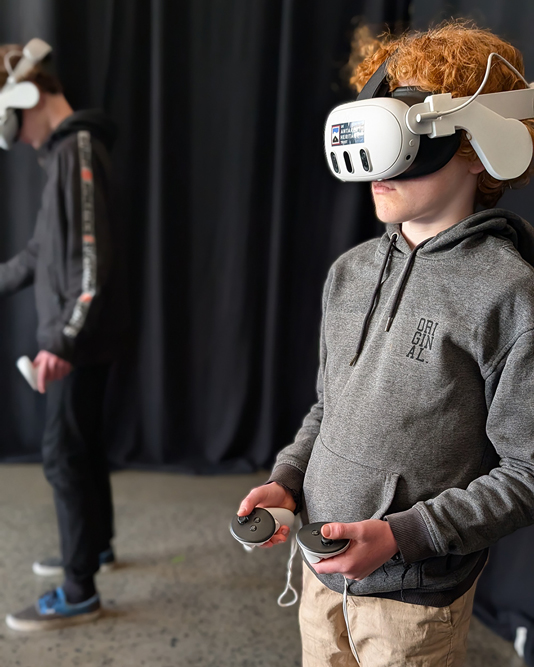
The variety of venues was a key strength of the tour. School sessions allowed us to work closely with younger audiences, while museums, libraries and the festival reached people who might never otherwise encounter UKAHT’s work. Delivering in different settings also gave us valuable practical learning about headset fitting, accessibility, facilitation and supporting people who were trying VR for the first time.
Delivering the tour across New Zealand
From Christchurch, the tour continued to Auckland, Wellington, Arrowtown and Dunedin before returning to Christchurch. Each stop required the team to move equipment, set up, test the experience, brief venue staff and support a steady flow of participants, often within a very tight timetable. The road-trip section did at least provide spectacular scenery, excellent DJing and one memorable outbreak of crab-adjacent dancing.

Despite the distances and a bout of the sniffles that eventually caught up with the whole team, every planned session went ahead. Colleagues shared technical, facilitation and logistical responsibilities, supported one another through long delivery days and worked closely with host venues to give each participant a welcoming experience. There was still time to experience some local culture, including Auckland’s Sky Tower, Wellington’s cable car, complete with disco tunnels, and Dunedin’s striking railway station, all set against New Zealand’s stunning natural environment.
Impact and lasting connections
The tour showed again what immersive storytelling can do, moving some participants to tears. One person began their first VR experience feeling ‘anxious’ but ‘excited’. Afterwards, when asked for two words to describe it, they chose ‘resilience’ and ‘vulnerability’, reflecting the power of the story they had encountered. Younger visitors came away more curious about Antarctica’s history and nature. Across schools, museums, libraries and festival spaces, people experienced a remote place through the stories of those who lived and worked there.
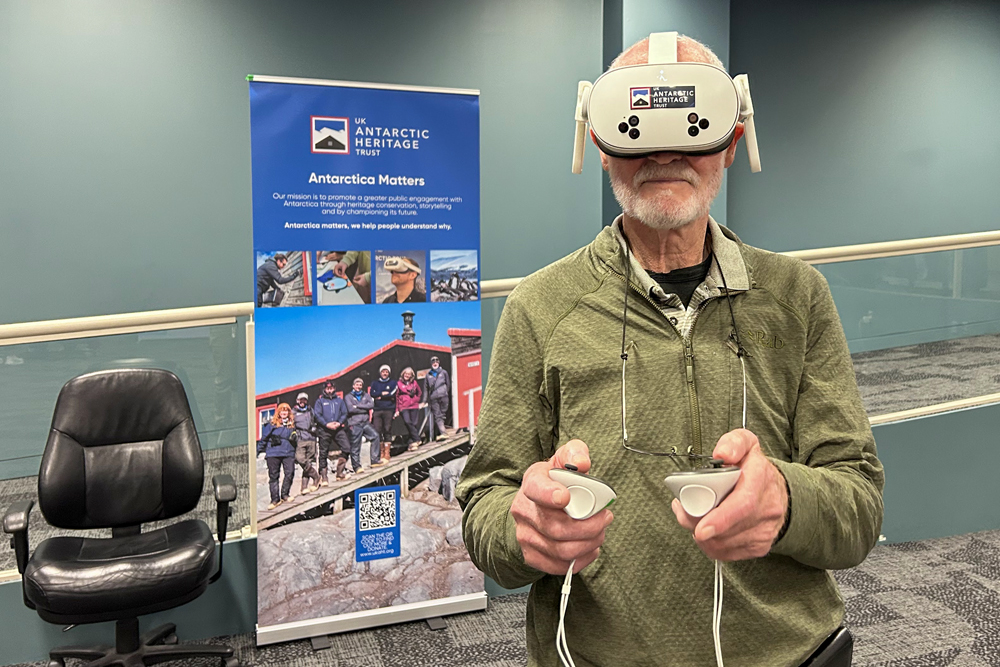

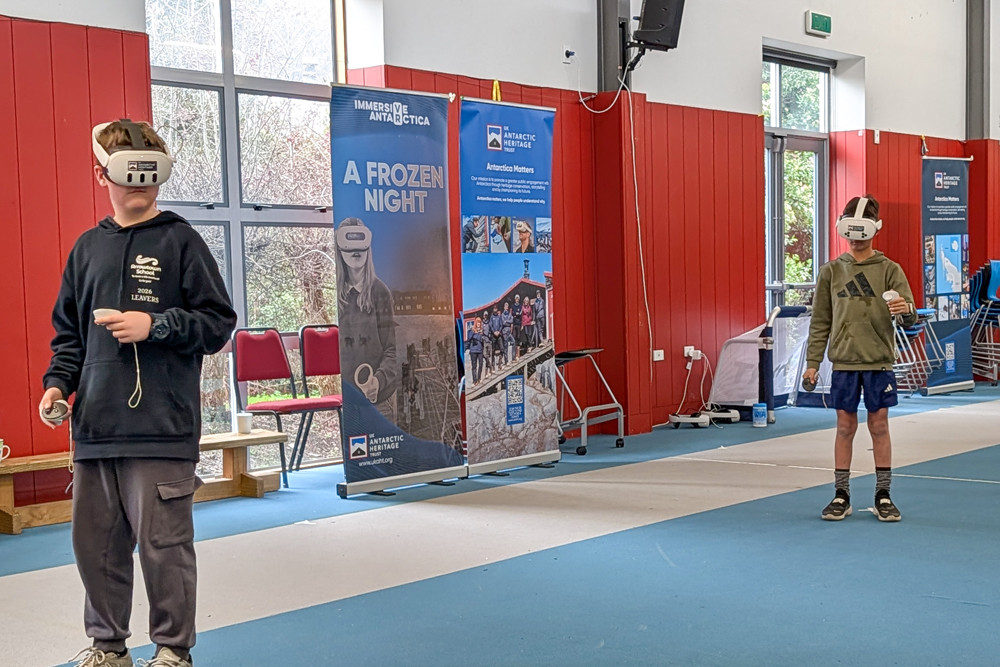
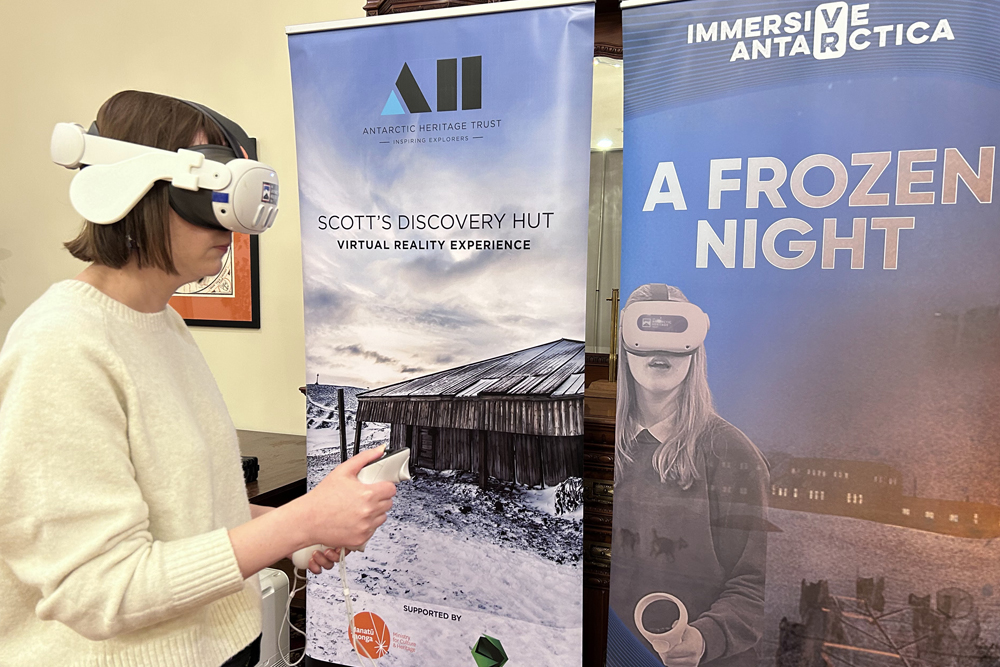
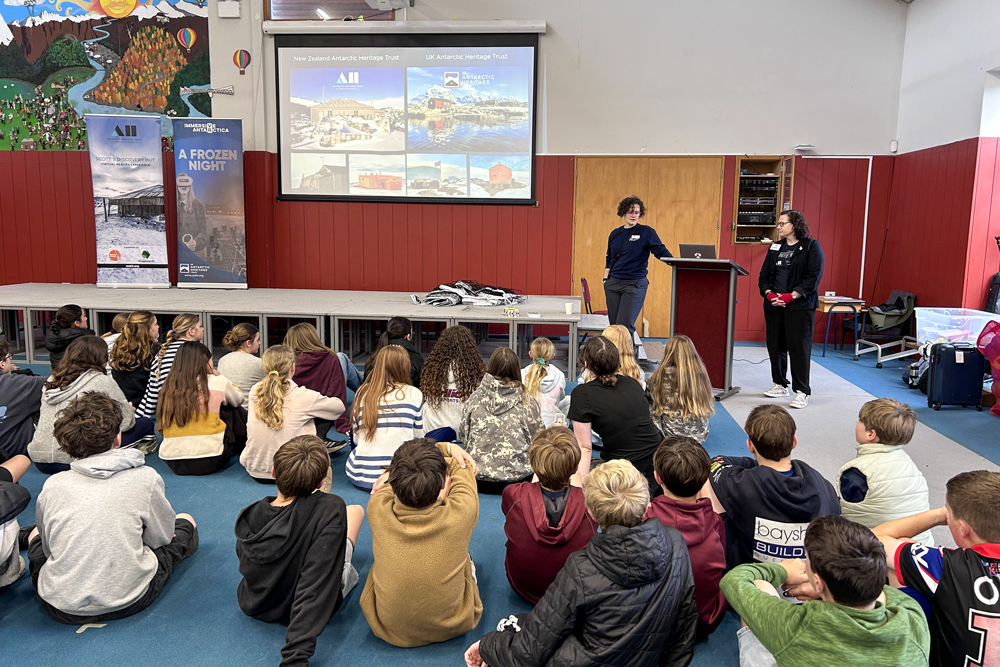
For us, the lasting story is also one of partnership. Working alongside Antarctic Heritage Trust and the Mawson’s Huts Foundation helped us connect the shared heritage of Britain, New Zealand and Australia, while learning from people who care for different parts of Antarctica’s extraordinary history.
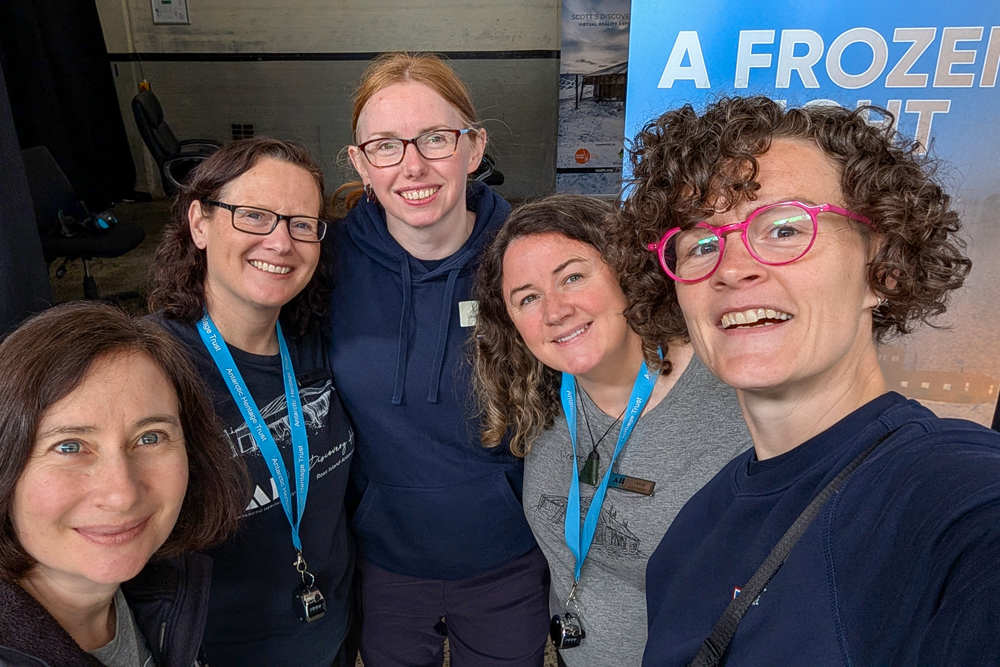
We came home with stronger partnerships, valuable operational learning and clear evidence that immersive storytelling can connect new audiences with Antarctic heritage. We also returned with a respectable knowledge of Pineapple Lumps, hokey pokey ice cream (honeycomb to us), meat pies, cheese rolls, mousetraps and Whittaker’s chocolate, thanks to our New Zealand colleagues’ determined cultural induction. The snacks were memorable, but the real success lay in what the teams achieved together: helping participants better understand why Antarctica matters.
Experience A Frozen Night for yourself
Step into Antarctica from home with UKAHT’s virtual reality experience, A Frozen Night. Visit Stonington Island, explore its stories and experience Antarctic heritage in an entirely new way.

If you love a place, protect it
UKAHT is committed to making Antarctica, its heritage and its stories accessible to everyone.
Eighty years in Antarctica have left their mark on this beloved site. Now, Port Lockroy urgently needs restoration to protect its future. Please donate today.
Adopt a penguin
follow a unique colony at the end of the world
Your adoption directly supports on-site colony monitoring and conservation at Port Lockroy. Funds go directly to paying for a wildlife monitor to travel to Antarctica and study the penguin colony at Port Lockroy for the austral summer.