






Are there insects in Antarctica? Wildlife monitor Peter Watson explores the tiny life surviving on the continent.
When people ask me about wildlife in Antarctica, they usually want to hear about penguins, seals and whales. After three months working as UKAHT’s wildlife monitor at Port Lockroy, I can understand why. Life on Goudier Island is wonderfully loud, busy and full of gentoo penguins going about their daily dramas.
But Antarctica’s wildlife story is not only told by the animals we can see from the boot room window. Look much closer – under stones, among mosses, algae and damp patches of soil – and you find another world entirely. It is smaller, quieter and much easier to miss, but no less extraordinary.
So, are there insects in Antarctica? The answer is yes, just not in the way you might expect.

Are there insects in Antarctica?
Antarctica is not a place of buzzing summer meadows. Its cold, dry, windy conditions make life difficult for most insects. There are no butterflies drifting over the ice, no bees visiting flowers and no clouds of mosquitoes rising at dusk.
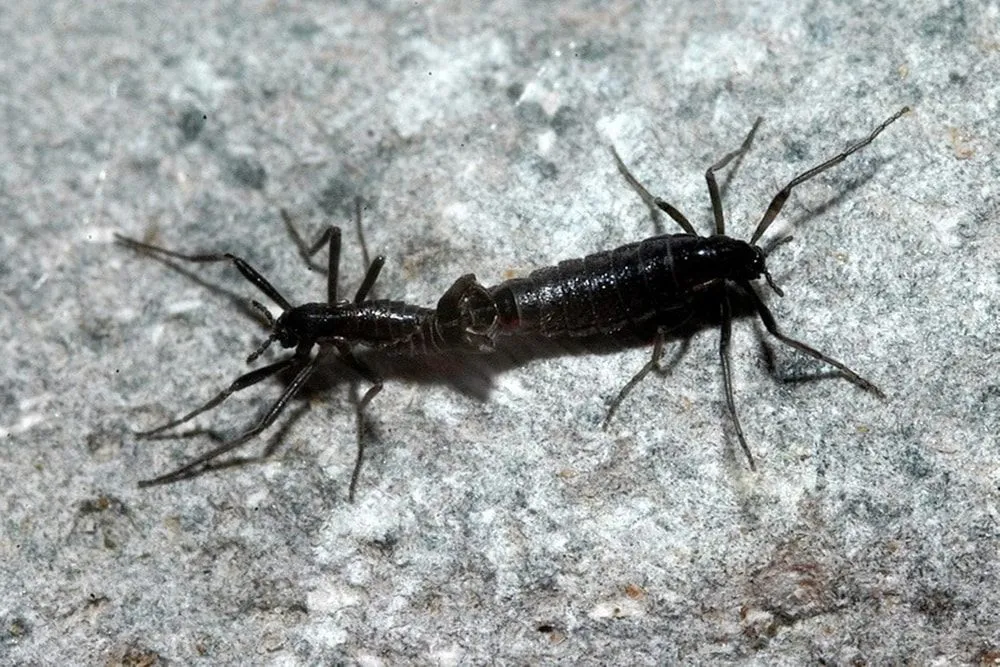
However, Antarctica does have insect life. The best-known example, and the only native insect known to live year-round on the Antarctic continent, is the Antarctic midge, Belgica antarctica.
There are also many other tiny invertebrates in Antarctica, including mites, springtails, nematodes and tardigrades. These are not insects, but they are part of the same hidden world of miniature Antarctic survival. In many ice-free places, these small creatures are among the most important permanent land animals on the continent.

At Port Lockroy, the wildlife that fills your day is usually larger and louder: gentoo penguins greeting their chicks, skuas patrolling the shoreline, leopard seals cruising past the rocks. But working in Antarctica teaches you to notice detail. Even the smallest life has adapted to one of the harshest environments on Earth.
Belgica antarctica: the Antarctic midge
The Antarctic midge, Belgica antarctica, is a tiny, flightless insect found around the Antarctic Peninsula region. It is only a few millimetres long, but it has a remarkable claim to fame: it is the largest purely terrestrial animal native to Antarctica.
That may sound surprising, especially on a continent associated with colossal icebergs and vast whale migrations, but most of Antarctica’s larger animals depend on the sea. Penguins, seals and whales are part of a marine food web. The midge, by contrast, spends its life on land.

Its lack of wings is one of its Antarctic superpowers. In a place where fierce winds can arrive quickly, flight is not always an advantage. A wingless insect is less likely to be blown away from the sheltered, damp habitats it needs to survive.
The midge spends most of its life as a larva, tucked away in protected microhabitats such as moss, algae, decaying organic matter and moist soil. The adult stage is brief. When conditions allow, adults emerge, mate and lay eggs before their short lives come to an end.
In other words, it is not showy. It does not dominate the landscape. But it is perfectly suited to its place.
How can insects survive in Antarctica?
Survival in Antarctica is about patience, timing and tolerance. For tiny invertebrates, the difference between life and death can be found in a few millimetres of shelter: beneath a stone, inside a moss bank, or in the slightly warmer, damper layer close to the ground.
The Antarctic midge has evolved to cope with extremes that would kill many insects elsewhere. Its larvae can endure freezing conditions, dehydration and long periods when growth is almost impossible. Rather than trying to escape winter, it waits it out.

That rhythm feels familiar to anyone who has lived through an Antarctic season. At Port Lockroy, our work is shaped by weather windows, changing light, sea ice, wildlife breeding cycles and the constant need to adapt. For the midge, survival is also seasonal: grow when conditions allow, conserve energy when they do not, and make the most of the short Antarctic summer.
Why tiny Antarctic wildlife matters
It is easy to overlook Antarctica’s smallest residents, but they have a big story to tell. Tiny invertebrates help us understand how life survives at the edge of possibility. They also remind us that Antarctica is not empty wilderness. It is a living environment, with delicate ecosystems that can be affected by climate change, human activity and non-native species.
This is why biosecurity matters so much. Everyone travelling to Antarctic sites has a role to play in keeping boots, bags, clothing and equipment clean. Seeds, soil and tiny organisms can travel unnoticed, and even small introductions can have lasting effects in fragile ecosystems.
At UKAHT, our work is rooted in care for Antarctica’s heritage, wildlife and environment. At Port Lockroy, that means monitoring penguins, protecting historic buildings and helping visitors understand the responsibility that comes with setting foot in such a special place.
So, are there insects in Antarctica? Yes – but only a few, and they are remarkable. They may be small enough to miss, but they are part of the bigger Antarctic story: a story of resilience, adaptation and life finding a way in even the coldest corners of our planet.
Lead image: Yuta Shimizu/Osaka Metropolitan University
If you love a place, protect it
UKAHT is committed to making Antarctica, its heritage and its stories accessible to everyone.
Eighty years in Antarctica have left their mark on this beloved site. Now, Port Lockroy urgently needs restoration to protect its future. Please donate today.
Adopt a penguin
follow a unique colony at the end of the world
Your adoption directly supports on-site colony monitoring and conservation at Port Lockroy. Funds go directly to paying for a wildlife monitor to travel to Antarctica and study the penguin colony at Port Lockroy for the austral summer.