






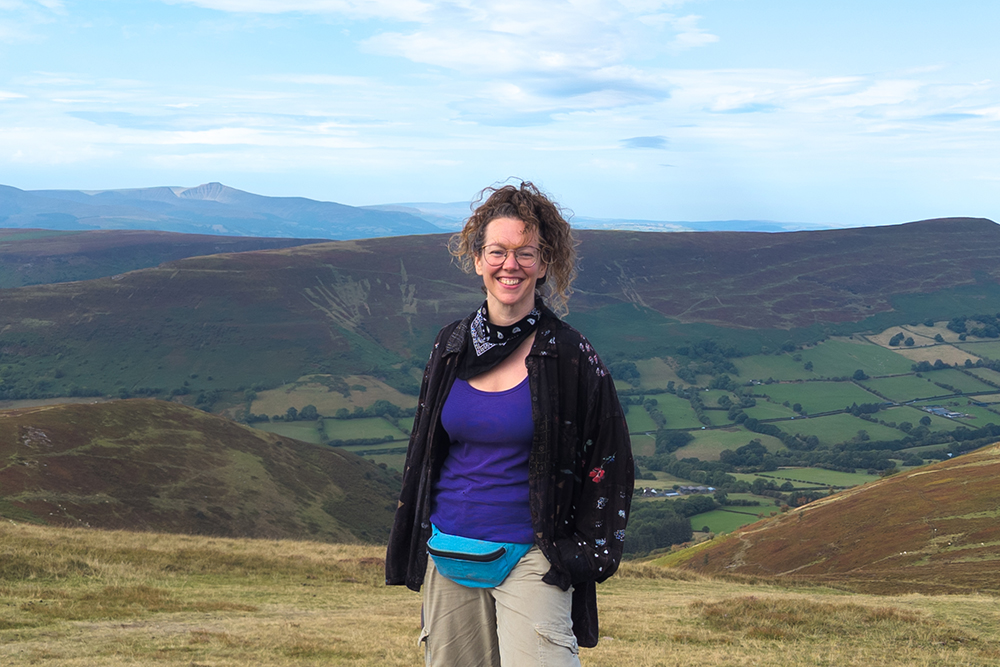
Meet conservation carpenter Kate Walford, whose passion for traditional joinery is taking her from Cardiff all the way to Port Lockroy.
This season, conservation carpenter Kate Walford will swap the historic windows and doors of Cardiff for the buildings of Port Lockroy as she joins UKAHT’s conservation team in Antarctica for the first time.
Specialising in traditional architectural joinery, Kate’s route into carpentry has been anything but conventional, taking her from health and social care to fine art, philosophy, sustainable building and, eventually, heritage conservation.
Ahead of her journey south, we caught up with Kate to talk about her winding path into the profession, why preserving old materials matters, women in carpentry and what she’s most looking forward to at the bottom of the world.
Tell us a little about yourself and your background in carpentry.
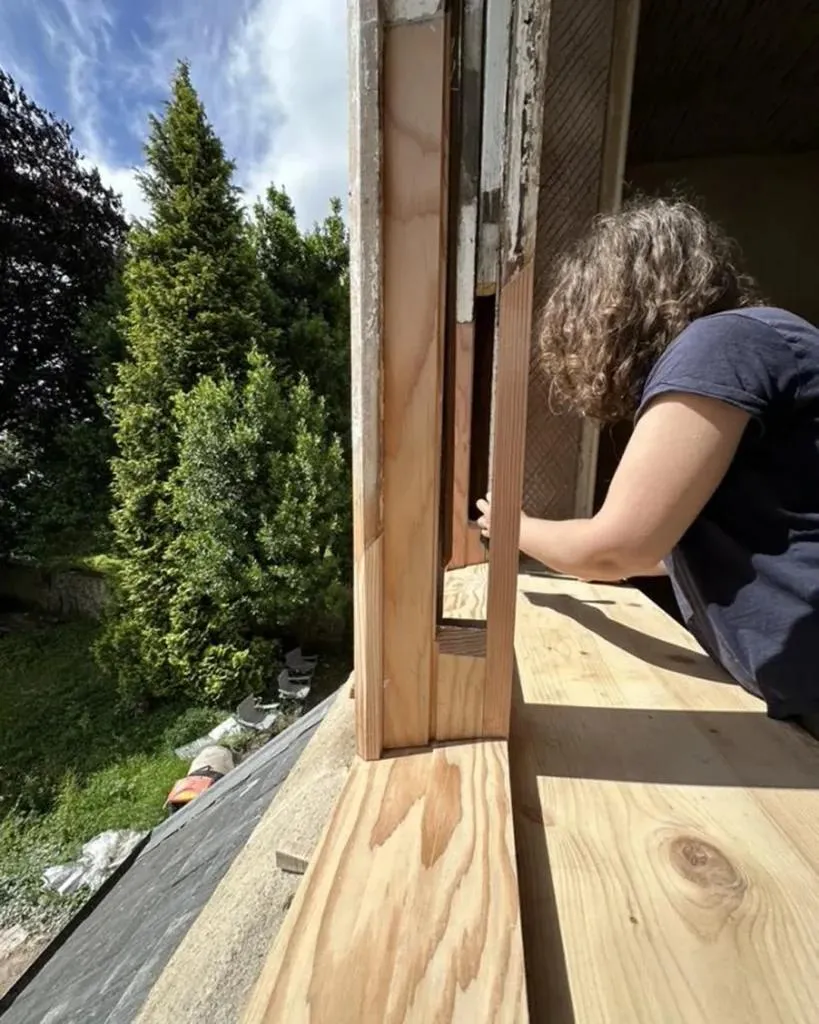
I’m a joiner specialising in traditional architectural joinery, repairs and replication, which basically means I make and mend old windows and doors.
I retrained completely about ten years ago. Before that, I worked in health and social care, which might seem completely unrelated, but I actually think that experience will be really useful at Port Lockroy.
Working in small teams, looking after people and having those so-called “soft skills” all matter when you’re living and working closely with a small group of people. The carpentry might be the hard skill, but I’m really looking forward to bringing both sides of my experience to the team.
How did you make the leap from health and social care into joinery?
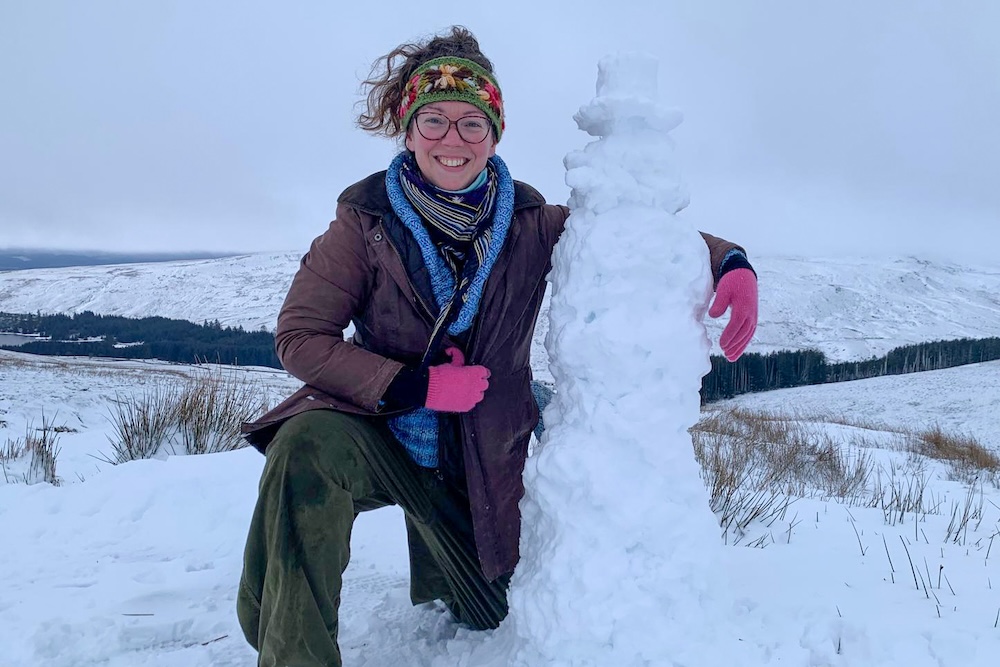
It was always an interest. My dad was a joiner when I was little, although I was probably more interested in his drawings than the actual joinery. They were beautiful. Art was always the thread running through my life. I eventually studied fine art and then philosophy, while working in other sectors. In my own time, I became increasingly interested in sustainability and conservation and started volunteering on eco-building projects.
The more I did, the more I wanted to learn, so I went back to college again and studied carpentry and joinery. My parents teased me because I’d already gone back to education several times and asked whether I was ever going to get a “proper job”. I said, I hope not.
I initially did the course simply because I was interested in it. I never imagined it would become my career, but eventually it did. My career path has never been particularly straight. My philosophy is: never go in a straight line when you can go around.
What led you to apply to work in Antarctica?
My friend sent me the job advert and said, “This is you all over.”
The conservation carpenter role that season involved a lot of window work, which was exactly what I was doing, so I immediately thought it was the best job I’d ever seen. I was telling everyone, “I’m going to Antarctica!”
Then I didn’t get the job. But I asked UKAHT for feedback and they were incredibly generous. They gave me detailed, useful advice and encouraged me to apply again. It wasn’t simply “thanks, but no thanks”. There was a genuine sense of, “We recognise something here, so don’t give up.”
I applied again this year and, thankfully, this time I made it. There’s definitely something in that old saying about trying again if at first you don’t succeed.
How different will the conservation work at Port Lockroy be from your usual work?
Fortunately for me, the principles aren’t actually that different. Cardiff has a large number of conservation areas and listed buildings, and I predominantly work on historic domestic properties. People approach me because repair work on heritage buildings requires a slightly different skill set from modern carpentry.
A lot of it comes down to respect for old materials. I work with things like historic glass, which can be nerve-racking. You might be removing very old, wafer-thin glass from a window using a hammer and chisel, knowing how fragile and irreplaceable it is.
That idea of preserving rather than replacing is one of the reasons I became interested in this work in the first place. Sustainability is about conserving resources, reducing waste and reusing what we already have.
I also really enjoy traditional processes and detailed work. The more complicated the joinery and the more something looks as though it might be beyond repair, the more interested I become. If someone says, “We could just rip that out and replace it,” my instinct is usually, “Absolutely not. We can repair it.”
Carpentry has traditionally been male dominated. What has your experience been as a woman in the profession?
It’s an interesting one because my own experience hasn’t always reflected the stereotype. When I was volunteering on building projects, there were lots of women. When I studied carpentry, my group was also close to 50-50. And today I predominantly work alongside one other joiner, who happens to be a man, so my everyday working environment is 50-50 too.
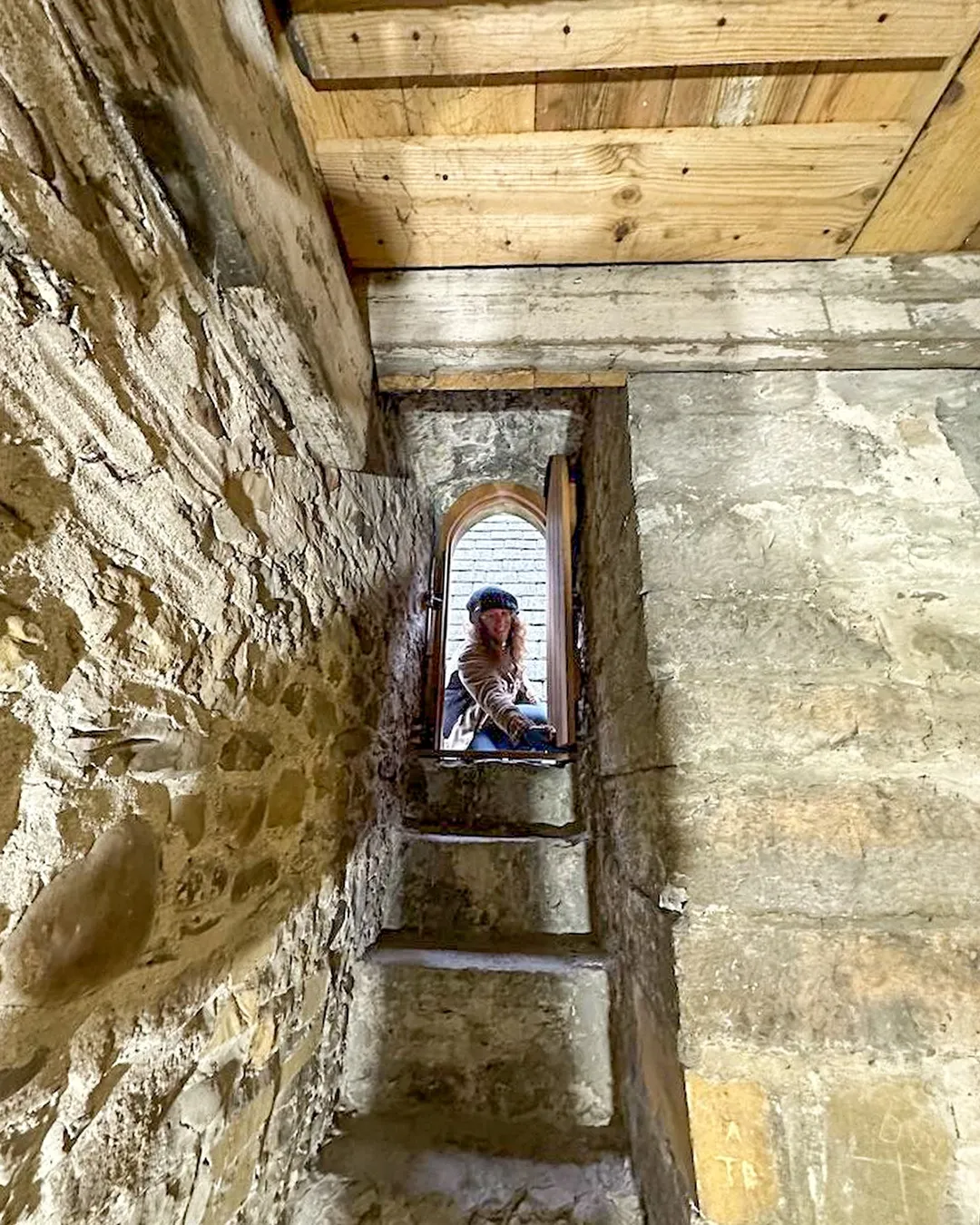
But on the relatively rare occasions when I work on a large construction site, I am usually the only woman. What surprised me when I entered the industry was discovering how many women were already working in construction. There are fantastic support networks where women share advice, job opportunities and solutions to problems, or simply have somewhere to talk after a difficult day.
There are more women working in the sector than you might realise from the outside. Perhaps there’s still a visibility issue, and that’s one reason I’m happy to talk about it. I want to be visible because there are more women here than necessarily get seen.
What would you say to someone considering a career in carpentry?
Do it with purpose. That advice applies equally to men and women. There used to be a perception that a trade was something you fell into because you weren’t good at something else, and I don’t think that’s a good reason to enter any profession.
Carpentry is incredibly rewarding and stimulating, and it can take you to some extraordinary places. In my case, quite literally to Antarctica.
But you have to want to do it. Many carpenters are self-employed, so there’s much more involved than simply working with wood. You have to run a business as well as practise the trade. It’s a career you should choose deliberately and be prepared to commit to.
What do you expect will be the biggest challenge of working at Port Lockroy?
Antarctica! Some of the challenges will actually be familiar, just on a completely different scale. Weather is something I already have to think about when I’m working in Wales. There’s simply going to be a lot more weather to think about in Antarctica.
I’m also used to working around people. Most of my jobs are in occupied homes, so you’re working around families, pets, furniture and everyday life. You have to explain what you’re doing and adapt your work around them.
At Port Lockroy, instead of a family and a dog, there could be hundreds of visitors and over a thousand penguins to work around. So perhaps it will be the same problems as home, just the Antarctic version!
What are you most looking forward to?
The answer is, again, Antarctica! But more specifically, I’m excited about going there as part of a team and actually contributing to the place rather than simply visiting it. I’ve always wanted to travel, but there’s something very different about living and working somewhere. You become part of that place and part of its story.
I love preserving the built environment at home because I think historic buildings affect how places feel, as well as contributing to sustainability. But doing that work at Port Lockroy, and helping preserve its story, makes it incredibly special.
And what makes this particular conservation job so special?
I’m really looking forward to working with Jo and Hugh. When I met them, one of the things that struck me was that neither of them mentioned the fact that I was a woman. We simply met as carpenters.
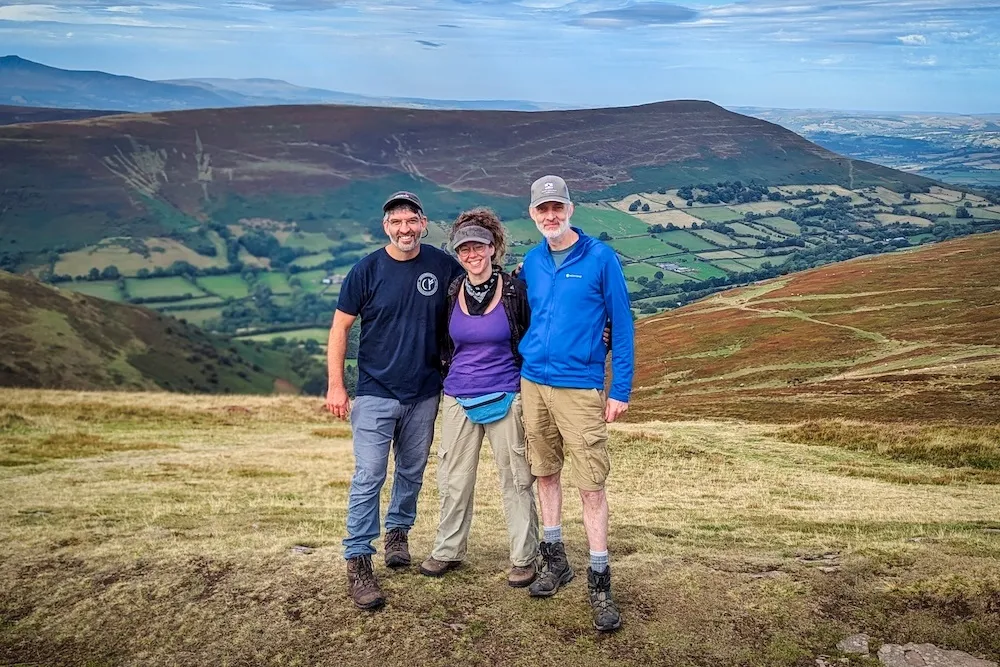
That might sound like a small thing, but it meant a lot. I’m very aware that I work in a male-dominated profession, but it was refreshing that the work came first. I’m excited to learn from them, work alongside them and probably have some very good conversations along the way.
More than anything, though, there’s the significance of what we’ll be working on. Port Lockroy isn’t somebody’s house. This is global history. It belongs to everyone. To have the chance to play even a small part in conserving that history is incredibly special.
If you love a place, protect it
UKAHT is committed to making Antarctica, its heritage and its stories accessible to everyone.
Eighty years in Antarctica have left their mark on this beloved site. Now, Port Lockroy urgently needs restoration to protect its future. Please donate today.
Adopt a penguin
follow a unique colony at the end of the world
Your adoption directly supports on-site colony monitoring and conservation at Port Lockroy. Funds go directly to paying for a wildlife monitor to travel to Antarctica and study the penguin colony at Port Lockroy for the austral summer.