






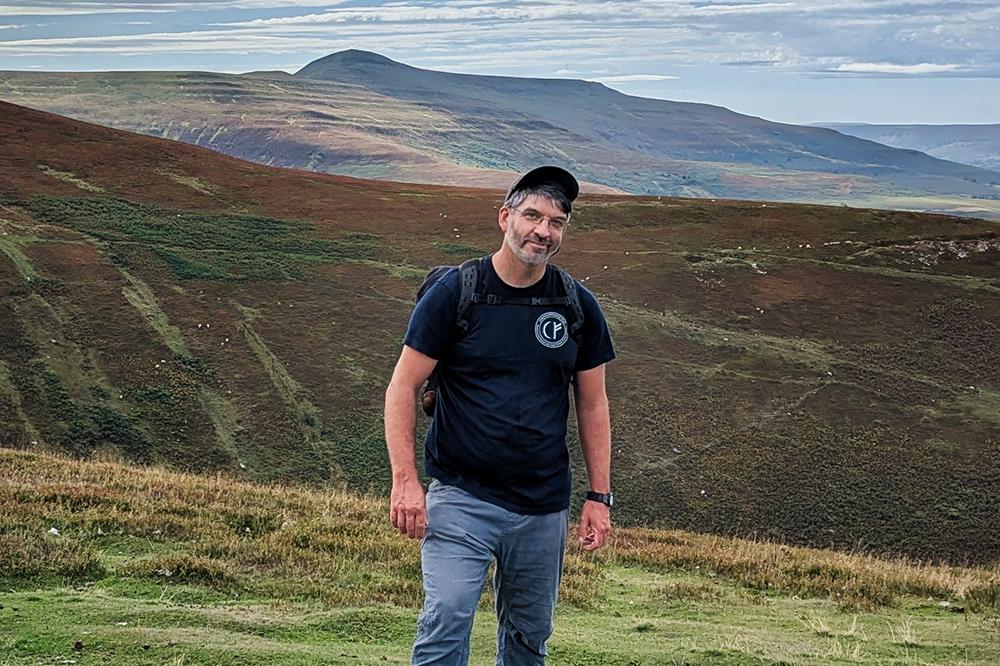
Conservation carpenter Hugh Arnold reflects on heritage craft, Operation Tabarin and the extraordinary connection between past and present Port Lockroy carpenters.
This Antarctic season, conservation carpenter Hugh Arnold will swap historic timber frames in Britain for the buildings of Port Lockroy, joining UKAHT’s conservation team for the first time.
Hugh’s route into carpentry has been anything but conventional. After studying Earth Sciences, he moved into forestry and tree surgery before discovering construction carpentry while volunteering at an earthquake-damaged orphanage in Guatemala. Since returning to the UK, he has spent much of his career repairing and conserving historic timber-framed buildings – including one of the most remarkable medieval structures in the country.
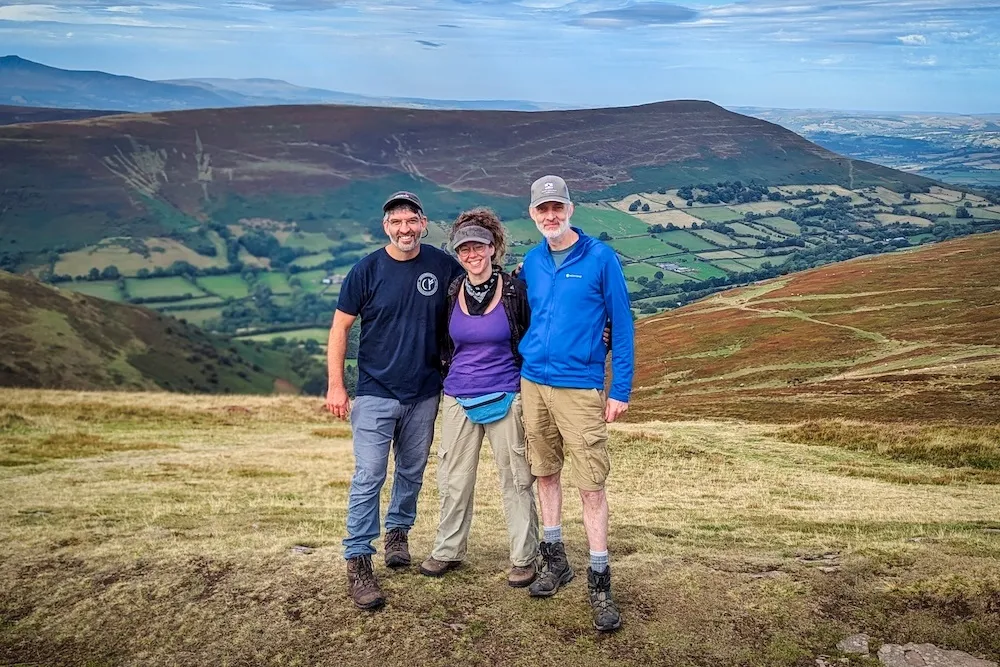
Ahead of his journey south, we caught up with Hugh to talk about craftsmanship, conservation and what it means to follow in the footsteps of the carpenters who built Port Lockroy more than 80 years ago.
How did you find your way into carpentry?
I studied Earth Sciences at Lancaster University, but when I left, I had this realisation that, although I was interested in science, I didn’t feel like I had many practical skills. I wanted to be capable of actually making and fixing things.
That led me into forestry and tree surgery, and through that into green woodworking. Then, while travelling in Guatemala, there was an earthquake and an orphanage nearby had some damaged buildings. They put out a call for volunteers, so I went down and helped demolish one of the damaged buildings.
Later, I went back and helped build a house there, working alongside a Dutch carpenter called Marcel and an American carpenter called Rob. That was really my introduction to proper construction carpentry.
It was incredibly hot and humid and we were working in shorts and t-shirts, cutting timber with circular saws and bashing in nails. I’ve got this brilliant photo of myself crouched among all the roof trusses of the finished building. I just remember thinking it was so much fun.
After that, I trained in mechanics as well, then spent time working on a construction project in Spain. My wife, Astrid, is a carpenter, and I gradually became more involved in heavy timber framing through working with her. We returned to the UK in 2007 and I’ve been working with Emanuel Hendry ever since.
What made you want to join UKAHT and work in Antarctica?
I actually applied the previous year as well. I’m at a stage in life where I’ve got a little more freedom. My youngest child is 16 now, so it’s easier for me to disappear for a while than it would have been a few years ago. I travel around the UK through my work, and I’ve been lucky enough to do some really interesting jobs, but I was craving a proper adventure. I wanted to do something a little bit bigger and further away. Antarctica certainly ticks that box.
Much of your career has involved historic buildings. What does heritage carpentry demand that other carpentry doesn’t?
The first conservation job I worked on was in 2009, and pretty much all of my heritage work since then has involved heavy timber frames. That can mean anything from taking out and replacing enormous structural timbers, sometimes using chain hoists or cranes, right down to making tiny patch repairs.
One of the most extraordinary places I’ve worked is Westminster Hall in Parliament. Its hammer-beam roof was completed in 1399, and its scale is incredible. It absolutely dwarfs you. The Palace of Westminster was largely destroyed by fire in 1834, but Westminster Hall survived. When you’re working there, you’re dealing with something that has witnessed centuries of history.

I remember some of the work simply involved cleaning the roof structure. You’d be up there in a full-face mask and protective suit with an enormous vacuum cleaner, and it could take a whole day just to clean one truss because it was so vast.
Conservation work like that is very different from making something new. Historic buildings don’t give you straight lines or simple answers. You can be looking at a space thinking, How on earth am I going to make a piece of wood fit into that?
You have to invent methods. There often isn’t an obvious solution, so the work demands much more creativity.
What qualities do you think make a good conservation carpenter?
You need to be rigorous and thorough, but you also have to be able to move between the detail and the bigger picture. It’s very easy to become completely absorbed in some tiny wedge-shaped piece of timber and forget what the whole structure is doing. You need to be able to zoom right in, work at the finest level of detail, and then zoom back out again. There also needs to be integrity in the work. But I think you need a little flair as well – a bit of panache.

You want someone looking at a repair and saying, Oh, look at that. That’s how they’ve done it, rather than simply thinking, There’s a repair.
You’ve been reading about Operation Tabarin ahead of the season. Has that changed how you think about Port Lockroy?
Definitely. I’ve been reading about Operation Tabarin, as well as Andrew Taylor’s account of the expedition and Secret South by Elke Mackenzie (Ivan Mackenzie Lamb). I’ve really enjoyed immersing myself in those stories. One of the things I’m most excited about is simply going to the places where those people were and seeing some of the same things they saw.

That history becomes much more alive when you’re physically in relation to it. You can begin to understand their stories and some of the hardships they experienced.
Their Antarctic experience was completely different from the one we’ll have. They were genuinely isolated. If a ship such as the RSS William Scoresby or SS Fitzroy wasn’t coming, then they were staying there.
Being able to stand where they stood and work on the buildings they knew is incredibly exciting to me.
Is there a particular tool you’ll be taking with you?
I’m bringing one of my chisels. My Auntie Helen is married to Vernon, whose father was a carpenter in Cornwall. Vernon gave me a collection of his father’s tools, and there are a couple of them that I particularly love using. One is this chisel. It’s incredibly useful, and I use it all the time, so I’m planning to take it with me. There’s something quite nice about that as well – taking an old carpenter’s tool all the way to Antarctica and using it to work on these historic buildings.
What makes the opportunity to conserve Port Lockroy particularly special to you?
For me, there’s something very powerful about the connection with the people who originally built it. Lewis ‘Chippy’ Ashton was the carpenter responsible for the building work at Port Lockroy during Operation Tabarin, and I find myself imagining him and the other men working there.
I think about their hands. I imagine them looking at their hands holding tools in much the same way that I look at mine when I’m working. Ultimately, their hands were the same as mine. They had enormous experience, strength and creativity, but they were working without the power tools we take for granted. There were no electric drills, circular saws, chop saws or electric planers. Everything had to be sawn, planed and drilled by hand.
I imagine all that capability flowing through their hands. There’s something about working on the same buildings that creates a link between us. More than 80 years later, I’ll be putting my own hands and tools onto the work that their hands created. That feels very special.
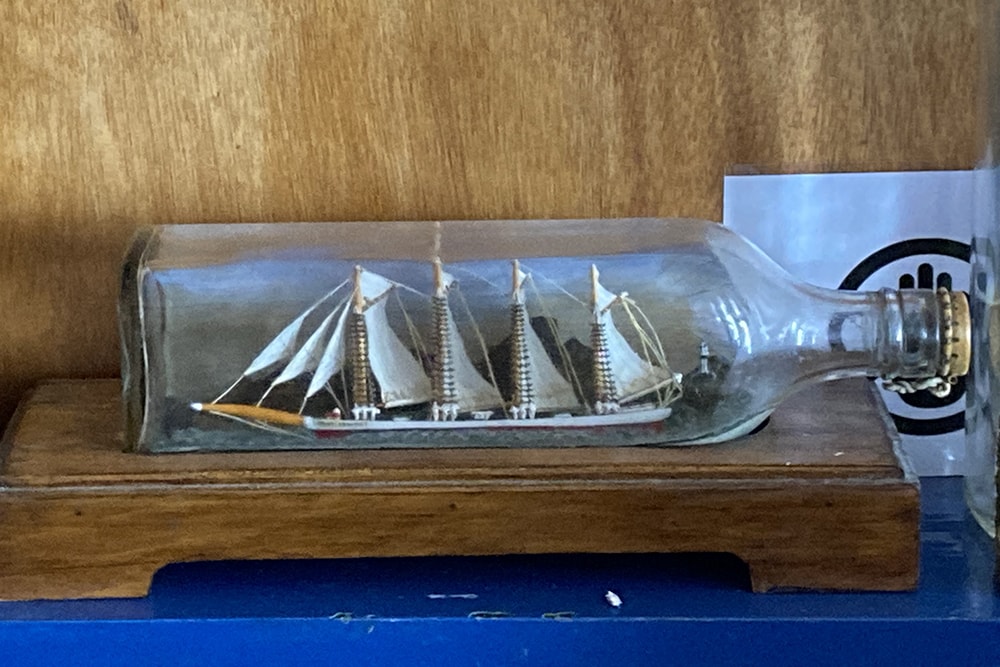
Do you think you’ll follow Chippy Ashton’s example and make a ship in a bottle while you’re there?
I’ve seen the ship in a bottle he made and it’s absolutely incredible. I’m not promising anything just yet. I think I’ll see how much spare time Antarctica gives me first!
If you love a place, protect it
UKAHT is committed to making Antarctica, its heritage and its stories accessible to everyone.
Eighty years in Antarctica have left their mark on this beloved site. Now, Port Lockroy urgently needs restoration to protect its future. Please donate today.
Adopt a penguin
follow a unique colony at the end of the world
Your adoption directly supports on-site colony monitoring and conservation at Port Lockroy. Funds go directly to paying for a wildlife monitor to travel to Antarctica and study the penguin colony at Port Lockroy for the austral summer.